Sides

Focaccia Barese

20 min Cook
Scroll to recipe
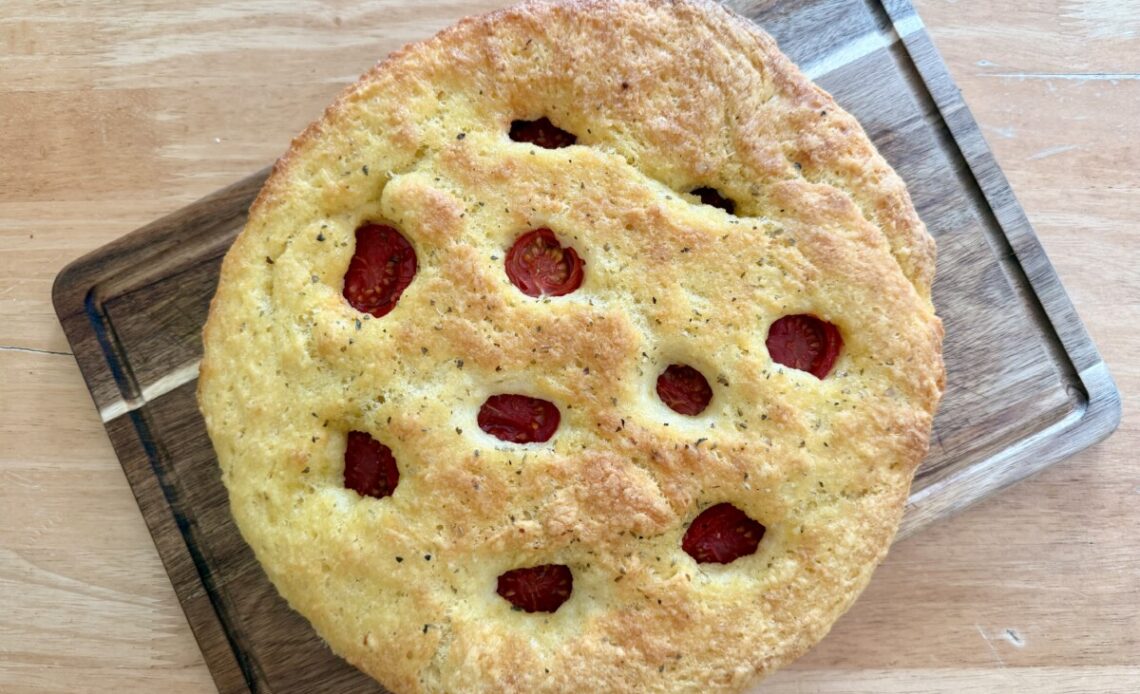
Focaccia barese out of the oven

Focaccia Barese owes its name to the city of Bari, a coastal town in the South of Italy, in the region of Puglia (Apulia). Its focaccia is one of the most popular delicacies of the area, characterized by its cherry or plum tomatoes on top. In the region, it’s a popular street food, often sold in bakeries, as a light meal or a snack.

What’s so special about Focaccia Barese?

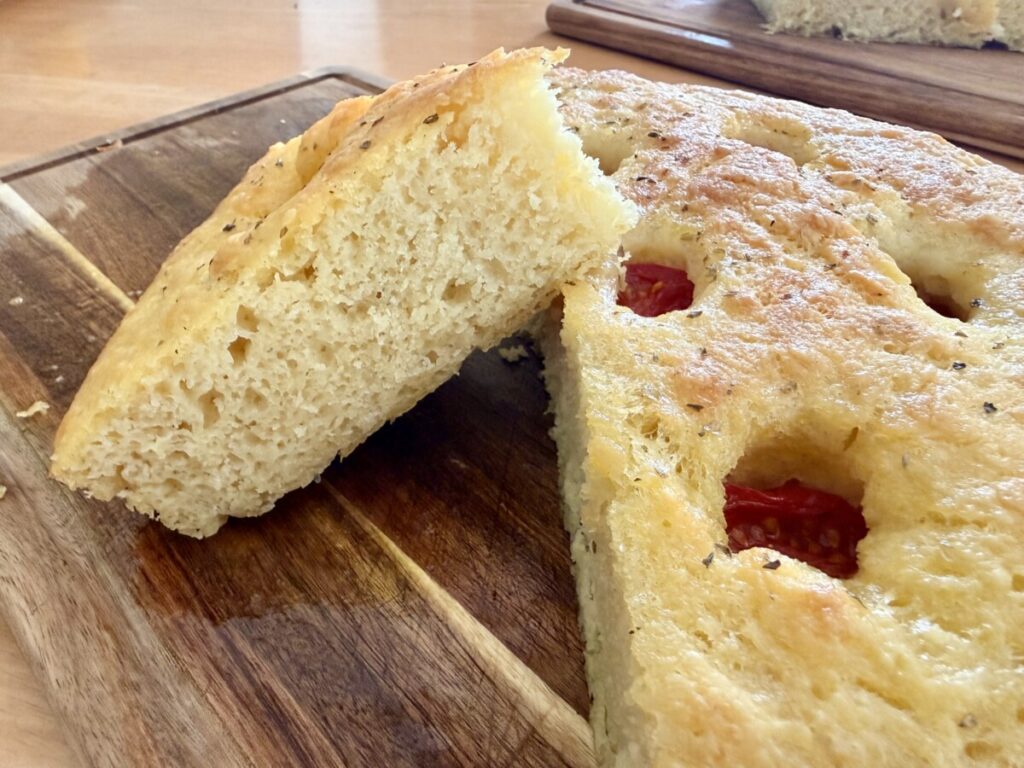
The ingredients of Focaccia Barese sets it apart from other typical focaccia breads in Italy: the dough uses both all-purpose flour and durum wheat flour, and it also incorporates mashed potatoes. The result is a taller bread with a crispy crust on the outside, and fluffy, airy dough that melts in your mouth as you bite it.
The ancient roots of Focaccia

Focaccia itself dates back to ancient Rome and even earlier, to the Etruscans and Greeks, who baked flatbreads on hot stones. The word focaccia comes from the Latin focus, meaning “hearth” or “fireplace,” where these breads were originally baked. In Puglia, the recipe evolved to incorporate local ingredients like semolina flour (from the region’s abundant durum wheat), olive oil (a staple of Apulian agriculture), and tomatoes (introduced after the 16th century from the Americas).

Today, it’s a proud symbol of Apulian cuisine, representing the region’s agricultural heritage and communal spirit. Many bakeries in Bari still prepare it using traditional methods, passed down through generations.

The secrets to a perfect focaccia

  • Use the right baking dish: to obtain a perfect crust, use heavy metal dishes or pie dishes. Thin metal won’t spread the heat properly, therefore you risk either burning or under-cooking your focaccia.
  • Pay attention to the water temperature: lukewarm water should be between 24-26 C (75-78 F) degrees.
  • Incorporate potatoes at the right temperature: When you incorporate the potatoes to the flours, they should be around 30 C (86 F). If they’re cold, your dough will become stringy and hard. If they’re too hot, they’ll kill the yeast. If you need to prepare the potatoes in advance, don’t put them in the fridge. Cover the bowl with a clean cloth and put it in a sunny spot to keep them warm.
  • Don’t add flour when working the dough: working a focaccia dough is a greasy business. Simply grease your hands with olive oil whenever the dough becomes too sticky, instead.
  • Steam wile baking: adding a little water at the bottom of the oven while baking will ensure that your dough is soft and fluffy.

Ready to get your hands dirty? Let’s bake!

Share
Focaccia Barese

Focaccia Barese

corinthian
This fluffy focaccia is a work of love. Often misinterpreted abroad, its traditional recipe will give you a focaccia that tastes nothing like the ones you have tried not only outside of Italy, but even outside of the Apulia region itself.
prep time
30 min
cooking time
20 min
servings
4
total time
4 hours and 50 min

Equipment

  • Kitchen scale

  • Spoon

  • Knife

  • Mixing bowls

  • Pot or steamer

  • Potato masher or vegetable squeezer

  • Graded glass

  • Baking dish

Ingredients

  • For the dough:

  • 300 g all-purpose flour

  • 200 g semolina (durum wheat flour)

  • 330 g lukewarm water

  • 120 g cooked potatoes

  • 8 g beer yeast for baking]

  • 12 g sea salt

  • 20 g extra-virgin olive oil

  • For the topping:

  • 250 g ripe cherry or plum tomatoes

  • 60 g black olives (optional)

  • 40 ml water

  • 40 ml extra-virgin olive oil

  • A handful dried oregano

  • 2 teaspoons coarse or flaked salt

  • For greasing:

  • 50 ml extra-virgin olive oil

Instructions

1

Prepare the potatoes

Rinse well the potatoes. Chop them into chunks and either boil them or steam them until fork tender. Drain from the water and set them aside to cool down for 10 minutes. As you can handle them, peel them. It's important that you won't let them cool down completely, as you will need to incorporate them in the dough when they're at ~30 C (86 F) degrees. Pass them through a vegetable squeezer or mash them (as finely as you can).
2

Make the first dough

Mix the two flours in a large mixing bowl. In a graded glass, mix the lukewarm water with the yeast, then pour 80% of it onto the flour. Mix roughly with a spoon for a couple of minutes, then add the potatoes. Grease your hands with some olive oil and mix by hand just enough to form a ball. Cover the bowl with a clean cloth and set it aside to rest for 20 minutes.
3

Incorporate oil and salt

Dissolve the salt in the remaining water and yeast, and mix in the olive oil. Add them to the dough and mix again with your hands until you incorporate them completely. At this point, the dough will look lumpy. Grease your hands again with olive oil, and continue to knead lightly by raising the dough on one side and folding it in the middle for a couple of times. Finally, grease your hands again and form a smooth ball.
4

First rest

Drizzle a little olive oil on the sides of the bowl (not directly on the dough), cover it with a clean cloth, and set aside to rest for 2-3 hours. The dough should be in a protected space from wind or breeze, at a temperature between 24-26 C (75-78 F) degrees. Don't expect the dough to rise a lot. If it does, you'll have good chances that it will deflate while cooking.
5

Transfer the dough

Grease the baking dish with generous olive oil. Don't be afraid of putting too much: this focaccia is supposed to fry on the outside to form a thin crunchy crust. If you use too little oil, the focaccia will crumble easily. Transfer the dough to the baking dish by simply making it roll into it. Let it rest for 10 minutes before you touch it.
6

Lay the dough

Grease your hands with olive oil, and gently stretch the dough towards the edges of the dish. Keep your fingers together while doing that, to avoid tearing the dough in the process.
7

Prepare the emulsion

In a small cup or glass, mix together 40 ml of water and 40 ml of olive oil with a little salt.
8

Prepare the topping

Rinse well the tomatoes, halve them, and push them cut side up into the dough. If using, drain the olives from their water and push them in the dough as well. Pour the emulsion on top of the dough, spreading it over its entire surface. Sprinkle the dried oregano and a a little rock or flaked salt.
9

Second rest

Set aside the baking dish and let the dough rest for 30-45 minutes. Its surface at this point should result bubbly.
10

Bake

Pre-heat the oven to the maximum temperature (250 C or 482 F). Place an oven plate at the bottom of the oven and cover its surface with water. Position the baking dish with the dough on the middle shelf and cook for 15-22 minutes. The focaccia is ready when the dough separates neatly from the sides of the dish and the tomatoes appear lightly brown and caramelized.
11

Serve

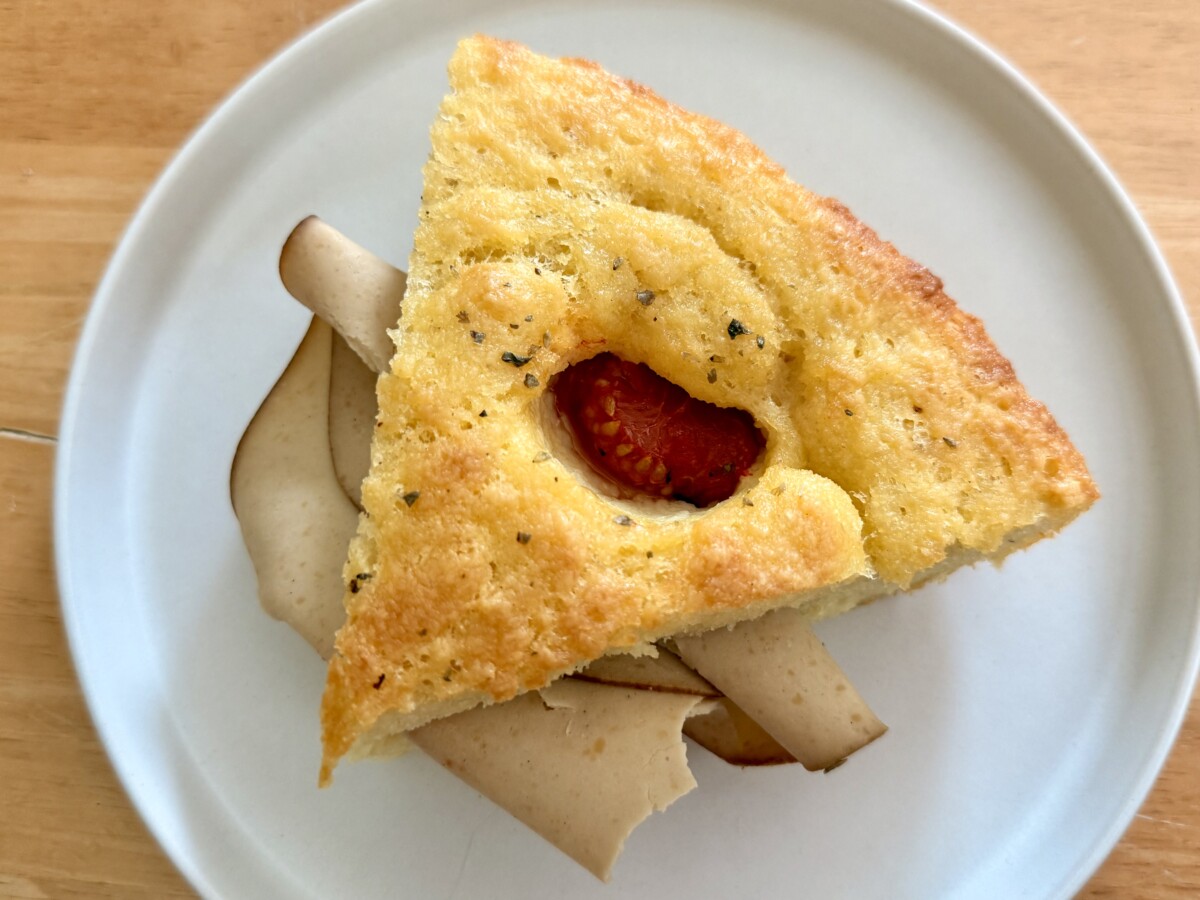
Take out of the oven and set aside for at least 15-20 minutes before serving. You can enjoy the focaccia as is, or cut it in the middle to stuff with deli meats or cheese. Buon appetito!
You may also like
Sides

Italian coffee cream

1 Mins read
Italian coffee cream sits at the intersection between a dessert and a drink. Made with equal parts of coffee and sugar (or…
Main dishes

Aubergine and sausage pasta

15 min Cook
Aubergine and sausage is one of those consolidated combinations of the Italian cuisine that almost any family has its own recipe for…
Sides

Cucumber salad

1 Mins read
In hot summer days, there’s nothing better than a refreshing cucumber salad to cool you down from the inside. This simple salad…

Leave a Reply

Your email address will not be published. Required fields are marked *