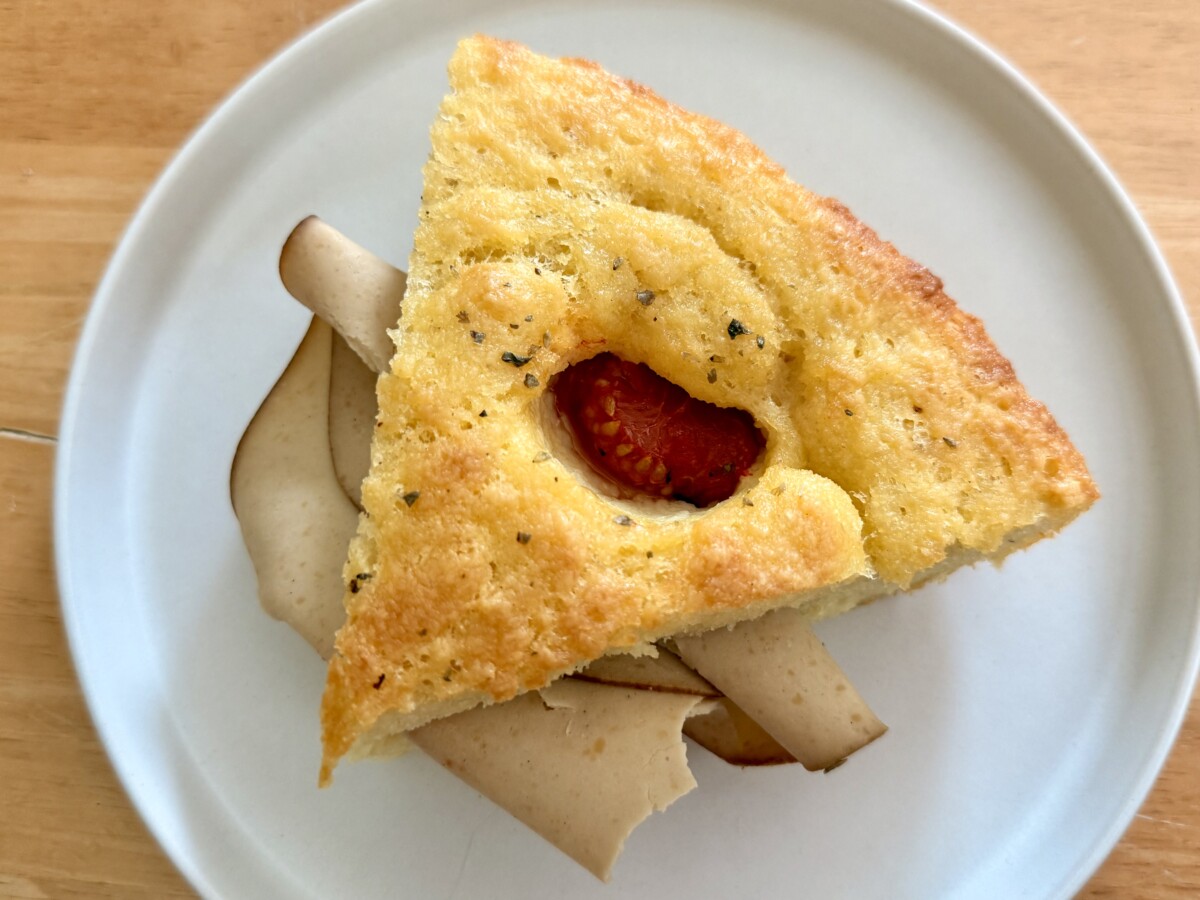
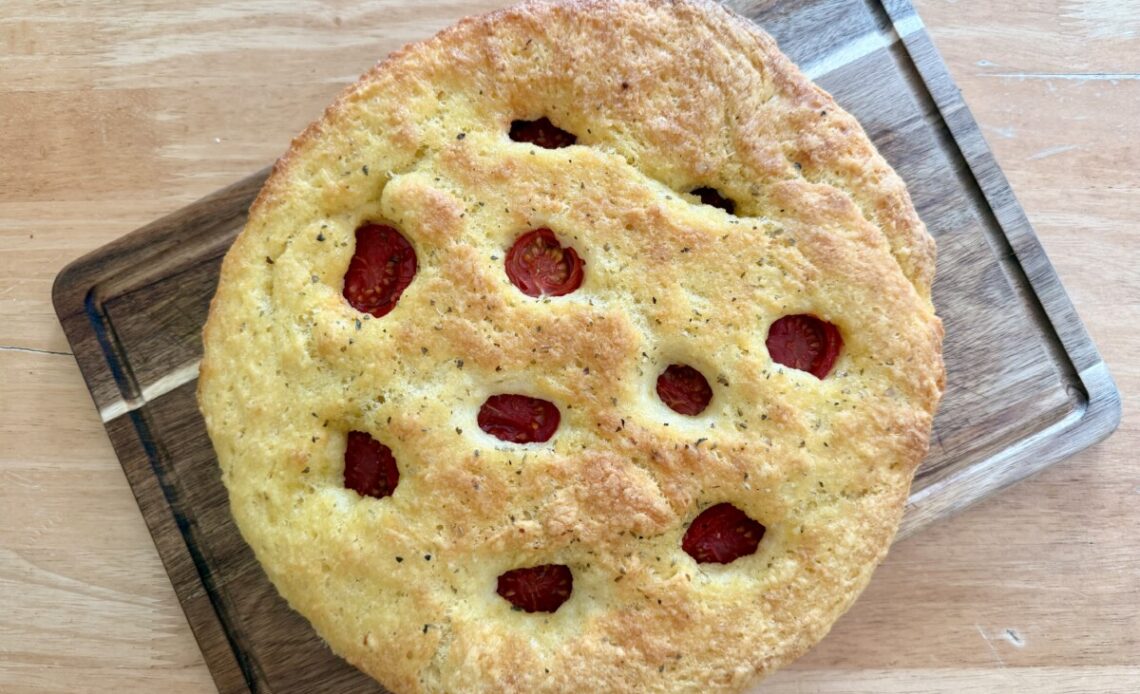
Focaccia Barese owes its name to the city of Bari, a coastal town in the South of Italy, in the region of Puglia (Apulia). Its focaccia is one of the most popular delicacies of the area, characterized by its cherry or plum tomatoes on top. In the region, it’s a popular street food, often sold in bakeries, as a light meal or a snack.
What’s so special about Focaccia Barese?
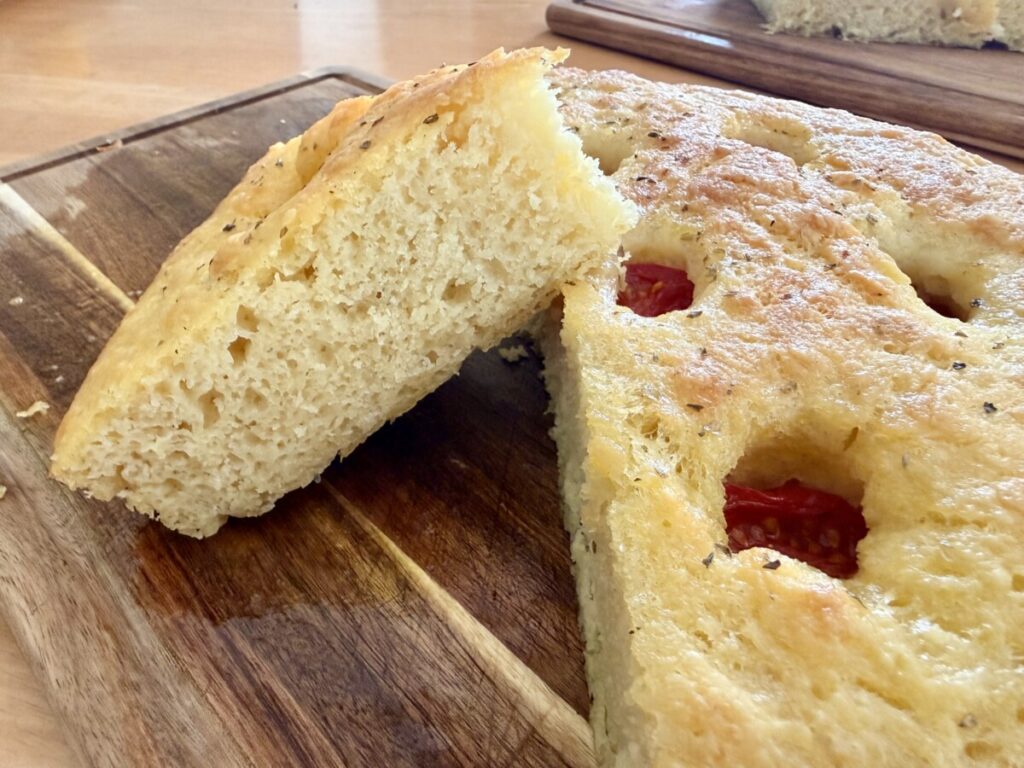
The ingredients of Focaccia Barese sets it apart from other typical focaccia breads in Italy: the dough uses both all-purpose flour and durum wheat flour, and it also incorporates mashed potatoes. The result is a taller bread with a crispy crust on the outside, and fluffy, airy dough that melts in your mouth as you bite it.
The ancient roots of Focaccia
Focaccia itself dates back to ancient Rome and even earlier, to the Etruscans and Greeks, who baked flatbreads on hot stones. The word focaccia comes from the Latin focus, meaning “hearth” or “fireplace,” where these breads were originally baked. In Puglia, the recipe evolved to incorporate local ingredients like semolina flour (from the region’s abundant durum wheat), olive oil (a staple of Apulian agriculture), and tomatoes (introduced after the 16th century from the Americas).
Today, it’s a proud symbol of Apulian cuisine, representing the region’s agricultural heritage and communal spirit. Many bakeries in Bari still prepare it using traditional methods, passed down through generations.
The secrets to a perfect focaccia
- Use the right baking dish: to obtain a perfect crust, use heavy metal dishes or pie dishes. Thin metal won’t spread the heat properly, therefore you risk either burning or under-cooking your focaccia.
- Pay attention to the water temperature: lukewarm water should be between 24-26 C (75-78 F) degrees.
- Incorporate potatoes at the right temperature: When you incorporate the potatoes to the flours, they should be around 30 C (86 F). If they’re cold, your dough will become stringy and hard. If they’re too hot, they’ll kill the yeast. If you need to prepare the potatoes in advance, don’t put them in the fridge. Cover the bowl with a clean cloth and put it in a sunny spot to keep them warm.
- Don’t add flour when working the dough: working a focaccia dough is a greasy business. Simply grease your hands with olive oil whenever the dough becomes too sticky, instead.
- Steam wile baking: adding a little water at the bottom of the oven while baking will ensure that your dough is soft and fluffy.
Ready to get your hands dirty? Let’s bake!