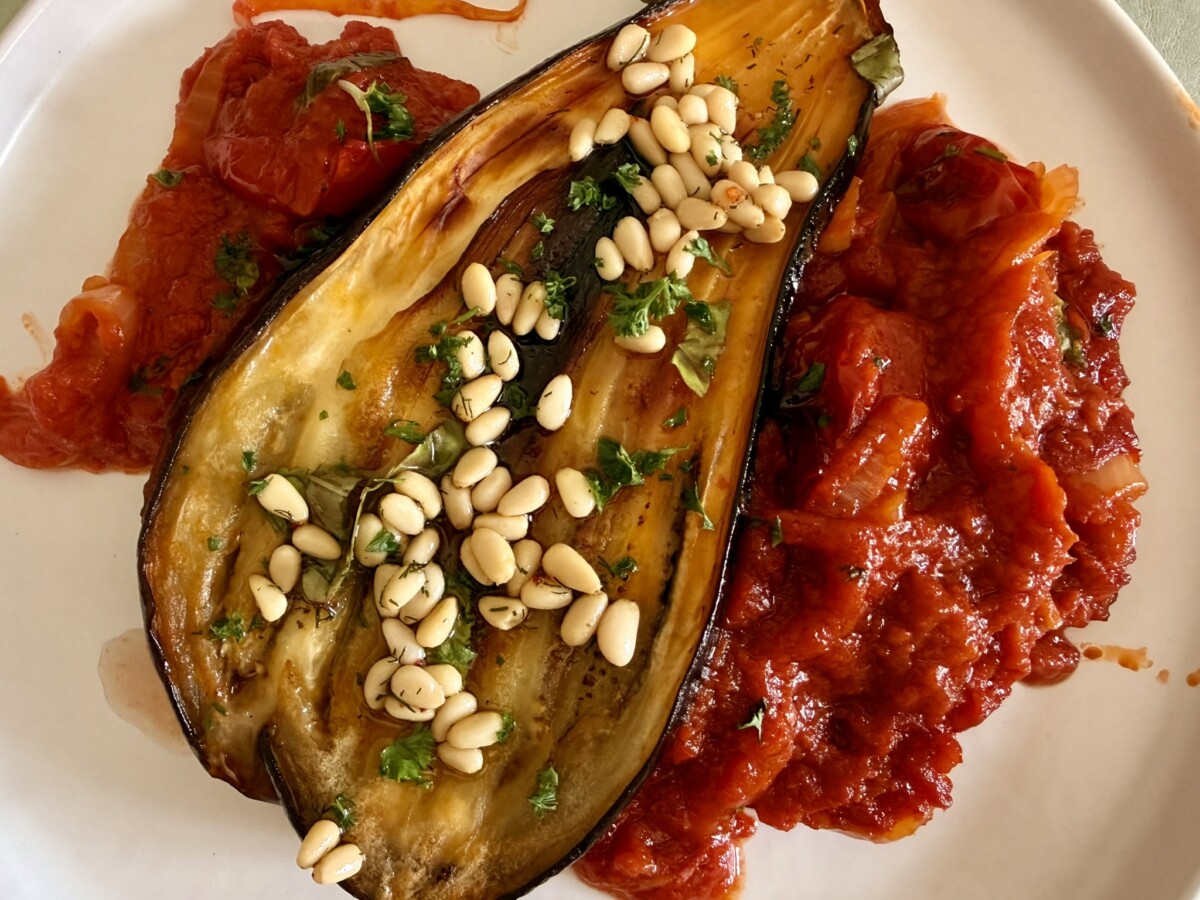
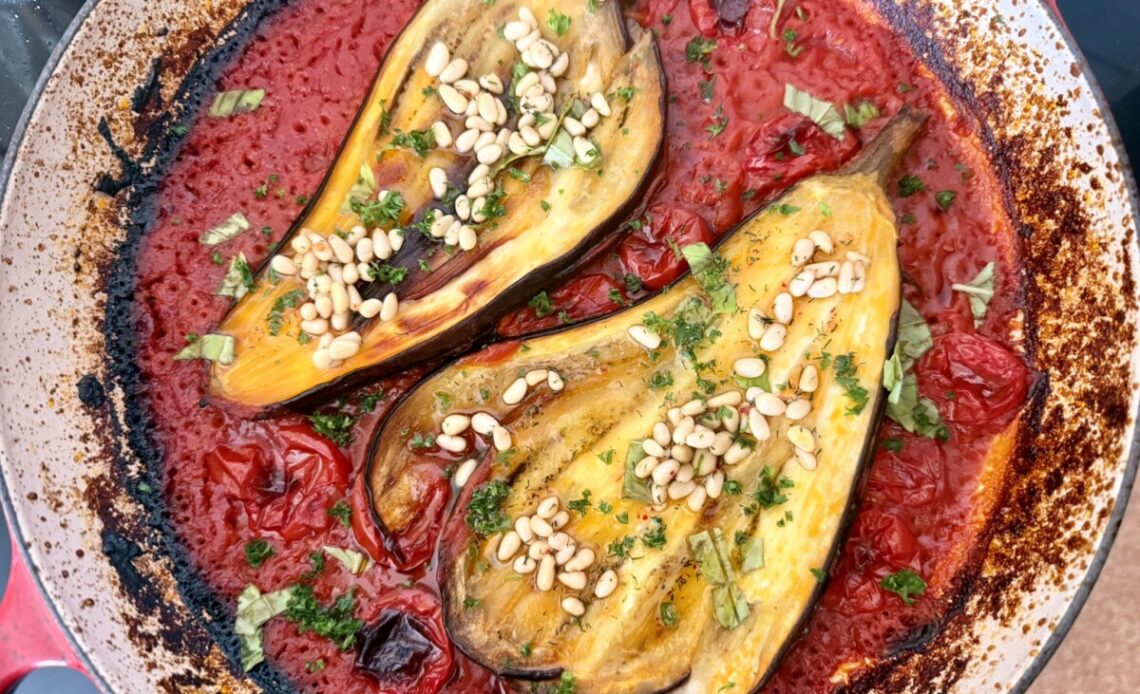
Hot days call for aubergines. Also known as eggplants, aubergines are a versatile ingredient in cuisines worldwide. Their mild, slightly bitter flavor and spongy texture make them ideal for absorbing sauces and spices. In Mediterranean dishes, they star in classics like moussaka and ratatouille, while in Middle Eastern cuisine, they’re the base for creamy baba ganoush. In Asian cooking, aubergines are often stir-fried, braised, or used in curries, such as Sichuan’s fish-fragrant eggplant or Japanese nasu dengaku. They can be grilled, roasted, or even pickled, adding depth to both vegetarian and meat-based dishes.
Between Italy and the Middle-East
Italy has a long tradition on ways to cook aubergines, and most of them are incredibly delicious: just think of Aubergine Parmigiana, mushroomed aubergines, and all the varieties of pasta using aubergines to make rich sauces. However, Italian cuisine often relies on frying the aubergine and that leads to heavy dishes. In my pursuit for simpler and lighter ways of cooking them, years ago I came across some of middle-Eastern chef Ottolenghi’s cookbooks, where aubergines are the absolute stars of his dishes. His specialty is to play with charred flavors. However, even his most brilliant recipes are very heavy on garlic and spices.
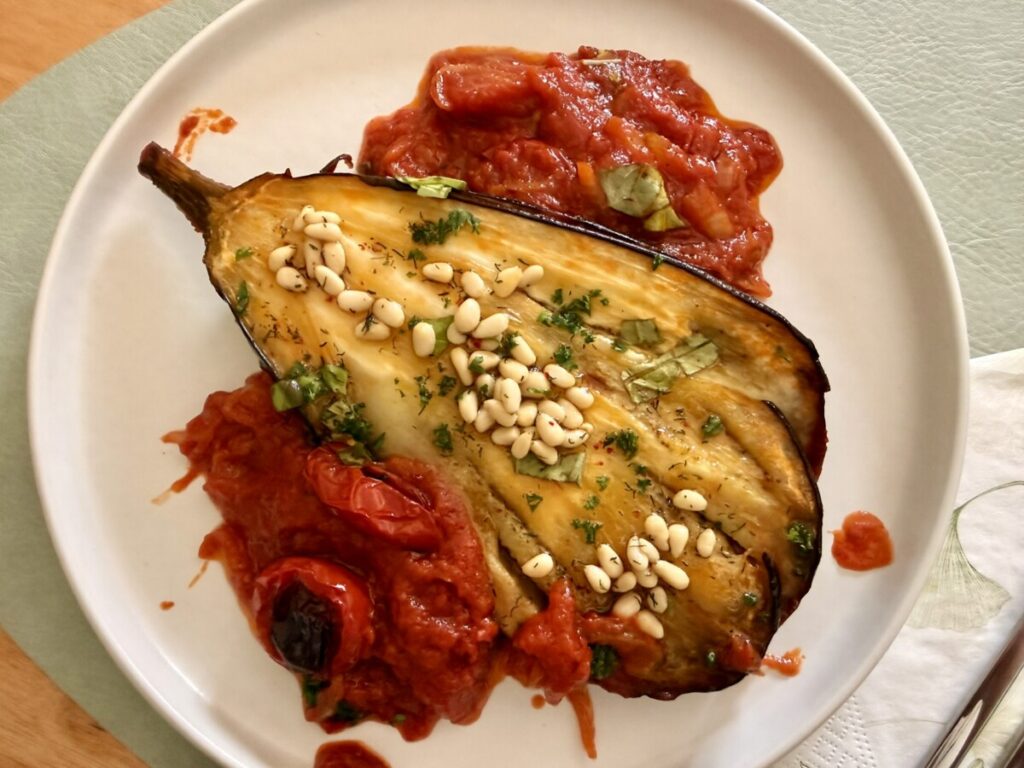
So here is my adaptation: a milder, sweeter version of a baked aubergine, fanned and cooked in an aromatic tomato sauce and topped with a sweet oil dressing with toasted pine nuts.
What is a fanned aubergine?
A fanned aubergine is an aubergine sliced as a fan: instead of cutting the slice all the way through, you cut just enough to leave the slice attached to the stem of the aubergine. You can fan an entire aubergine or the two halves separately. The advantage of fanning the aubergine is that the aubergine will cook faster and more thoroughly. It will also better absorb the flavors. The result? A soft aubergine that will slightly open like a fan in cooking, and forming layers that will melt in your mouth.
Ready to try it?