
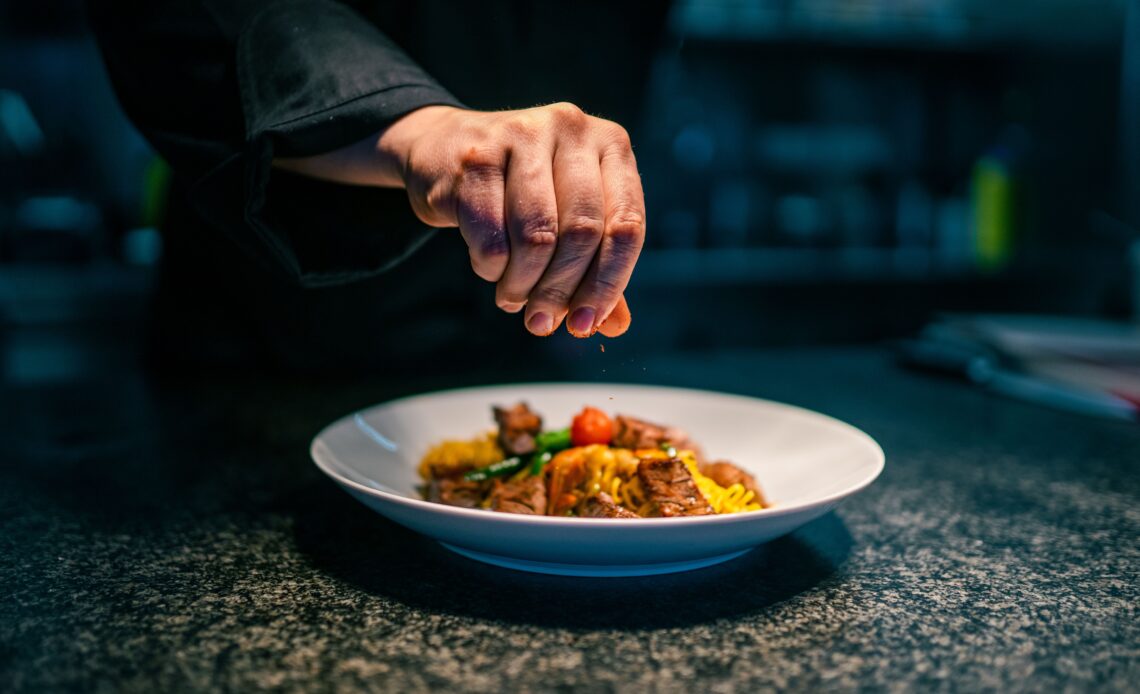
If you’ve ever flipped through an Italian cookbook or watched a nonna (grandmother) prepare her famous ragù, you might have noticed something curious: the absence of precise measurements. Instead of grams, cups, or teaspoons, Italian recipes often call for q.b.—short for quanto basta, which translates to “as much as is enough” or “just enough.”
To the uninitiated, this can feel like a culinary mystery. But for Italians, q.b. is part of their food culture.
How much is quanto basta?
Quanto basta is a flexible, intuitive approach to cooking. It’s an invitation to trust your senses (i.e., your eyes, your hands, your taste, your taste buds) rather than relying on rigid measurements. In practice, it means:
- A pinch of salt (un pizzico di sale): just enough to enhance the flavor, not overpower it;
- A drizzle of olive oil (un filo d’olio): enough to coat the pan or dress the salad, but not so much that it pools at the bottom;
- A handful of pasta (una manciata di pasta): the amount that feels right for the number of people you’re serving.
It’s not about guesswork; it’s about experience, instinct, and a deep understanding of ingredients.
How does quanto basta work?
For Italians, cooking is a sensory experience. Here’s how q.b. plays out in the kitchen:
- Taste as you go: Italians adjust seasoning and ingredients in real time. A dish is never finished until it tastes balanced. Whether it’s a simple tomato sauce or a risotto.
- Visual cues matter: the texture of a dough, the color of a soffritto (a base of sautéed onions, carrots, and celery), or the consistency of a sauce are all visual and tactile guides. If the dough feels too sticky, add a little more flour (q.b.) If the sauce is too thick, loosen it with a splash of water or wine.
- Adaptability is the key: Italian cuisine is deeply regional, and ingredients vary by season and location. Quanto basta allows cooks to adapt recipes based on what’s available, whether it’s a particularly juicy tomato or a batch of flour with a different moisture content.
- Generational knowledge: many Italians learn to cook by watching and assisting family members. Over time, they internalize the right proportions, not through measurements, but through repetition and observation.
Why do Italians trust quanto basta?
Italian cooking is rooted in tradition and simplicity. For centuries, home cooks relied on what they had, not what a recipe dictated. Quanto basta reflects this resourcefulness.
Italian cuisine celebrates the beauty of imperfection. A hand-rolled pasta shape, a slightly uneven dough, or a rustic loaf of bread. These flaws are part of the charm. Quanto basta embraces this spontaneity. The more you cook, the mroe you trust your instincts, and the more personal and creative your cooking becomes, distancing it from written recipes.
Embracing quanto basta, even if you’re not Italian
While it might be daunting at first, anyone can embrace the spirit of quanto basta. Begin with simple recipes, like a tomato salad or a basic pasta dish. Taste as you go and adjust seasoning gradually.
Watch Italians cooks, whether in person, on YouTube, or in cooking shows. Notice how they handle ingredients and trust their senses.
And finally… practice, practice, practice! The more you cook, the more intuitive quanto basta will become. Keep a notebook to jot down what works and what doesn’t for future reference. Remember: it’s not about perfection. It’s about enjoying the act of cooking and making each dish your own.
The golden rule of cooking: slow down
When you try cooking things for the first time, don’t be in a hurry. Even seasoned cooks make mistakes under pressure. Cooking well is not only about getting it right. It’s about slowing down and enjoying the experience. Cooking is not about following instructions, it’s creating something that’s good for the palate and for the soul.
So next time you’re in the kitchen, take a deep breath, grab a pinch of salt q.b., and let your instincts guide you. After all, as the Italians know, the best recipes are the ones written with love—and just enough of everything else.