
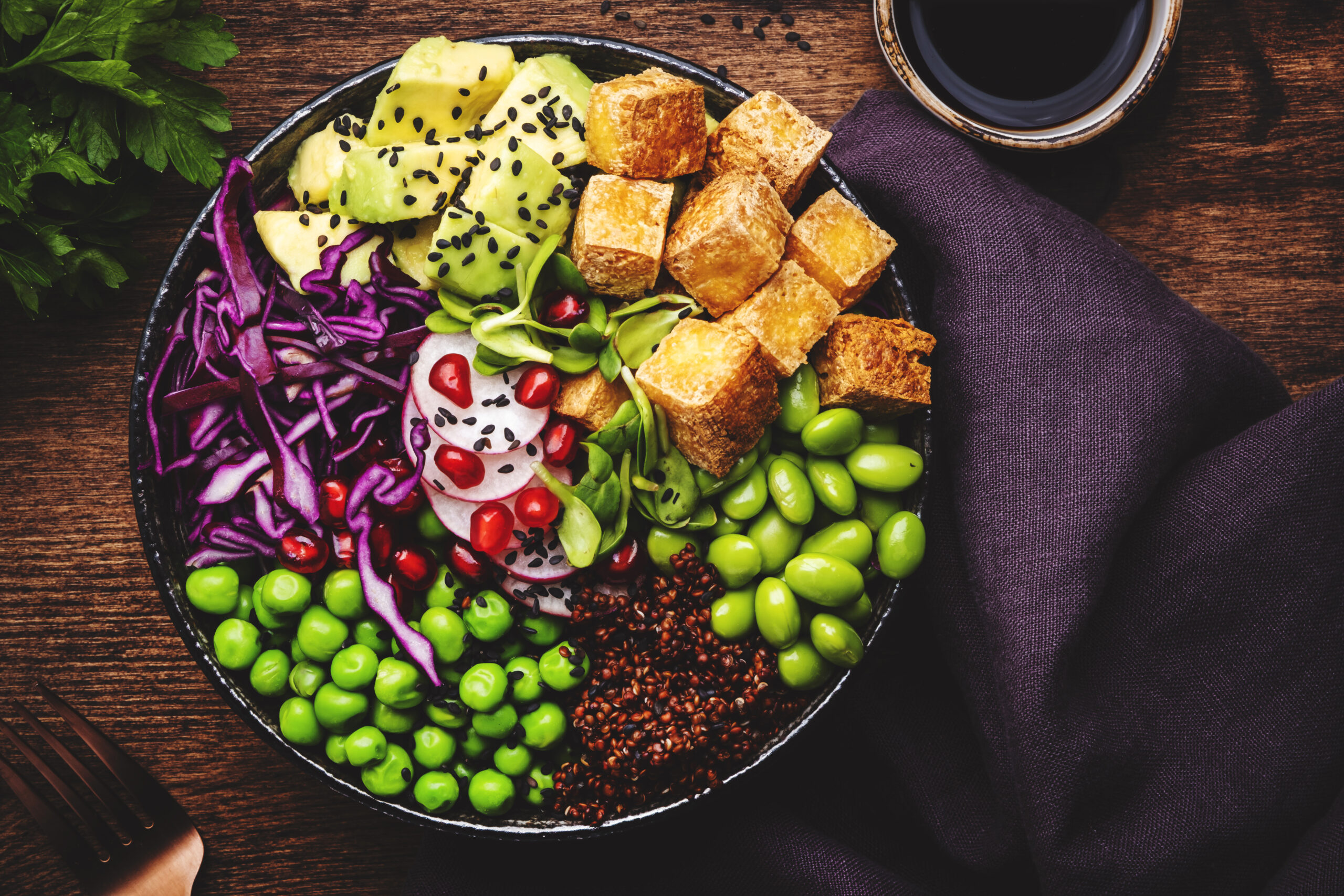
A Buddha bowl is a nourishing, one-bowl meal that’s as pleasing to the eye as it is to the palate. The name is said to originate from the rounded, full shape of the bowl, reminiscent of a Buddha’s belly, symbolizing abundance and balance. While the concept is rooted in Buddhist cuisine, which emphasizes plant-based, mindful eating, the modern Buddha bowl is a global phenomenon, celebrated for its versatility and health benefits.
The elements of a Buddha bowl
Creating a Buddha bowl is all about balance and variety. Here’s what you’ll need:
- Base: Start with a foundation that fills you up and provides energy. Think leafy greens (spinach, kale), cooked grains (quinoa, brown rice), or even noodles.
- Protein: Add a source of protein to keep you full and support muscle health. Options include beans, lentils, tofu, tempeh, chickpeas, or lean meats.
- Vegetables: Pile on a rainbow of veggies, raw, roasted, or steamed. The more colors, the more nutrients. Try bell peppers, carrots, beets, or broccoli.
- Healthy fats: Incorporate fats for satiety and flavor. Avocado, nuts, seeds, or a drizzle of olive oil are perfect choices.
- Sauce or dressing: A flavorful sauce or dressing ties everything together. It could be a tahini-lemon drizzle, peanut sauce, or a simple vinaigrette.
- Toppings: Finish with something crunchy or fresh: herbs, sprouts, or pickled veggies add texture and brightness.
Why eating Buddha bowls?
- Nutritional Benefits: Buddha bowls are packed with fiber, vitamins, minerals, and antioxidants. They’re a great way to get a variety of nutrients in one meal, supporting overall health and digestion.
- Mindful Eating: The act of assembling a Buddha bowl encourages mindfulness. You’re more likely to appreciate the colors, textures, and flavors, which can lead to better digestion and satisfaction.
- Versatility: Buddha bowls are endlessly customizable. You can use whatever ingredients you have on hand, making them perfect for reducing food waste and accommodating dietary preferences.
- Energy and satiety: The combination of complex carbs, protein, and healthy fats provides steady energy and keeps you full for hours, helping to avoid energy crashes and overeating.
How to integrate Buddha bowls into your diet
- If you do meal prepping, you can prepare components ahead of time and assemble bowls throughout the week. Grains, roasted veggies, and proteins can be made in bulk and stored in the fridge.
- Any meal can be transformed into a Buddha bowl: Buddha bowls aren’t just for lunch or dinner. A lighter version with yogurt, fruit, and granola can make a satisfying breakfast.
- If you want to involve your family, let everyone customize their own bowl. It’s a fun way to get kids involved in cooking and trying new foods.
- Finally, use seasonal produce and pantry staples to keep costs down. Buddha bowls are a great way to use up leftovers creatively.
Ready to create your own Buddha bowl? Start with your favorite base and build from there. Let your taste buds and creativity guide you!