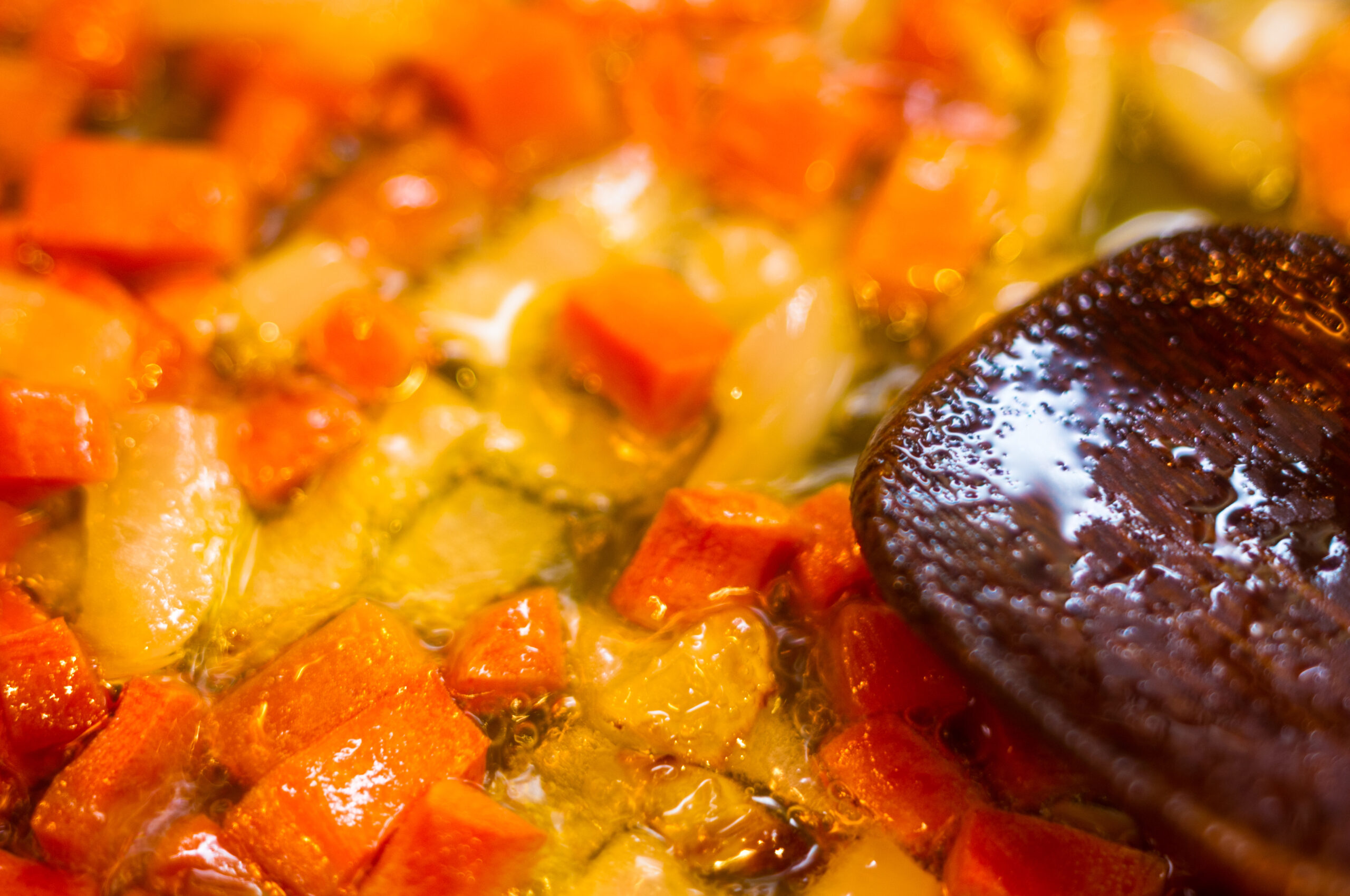
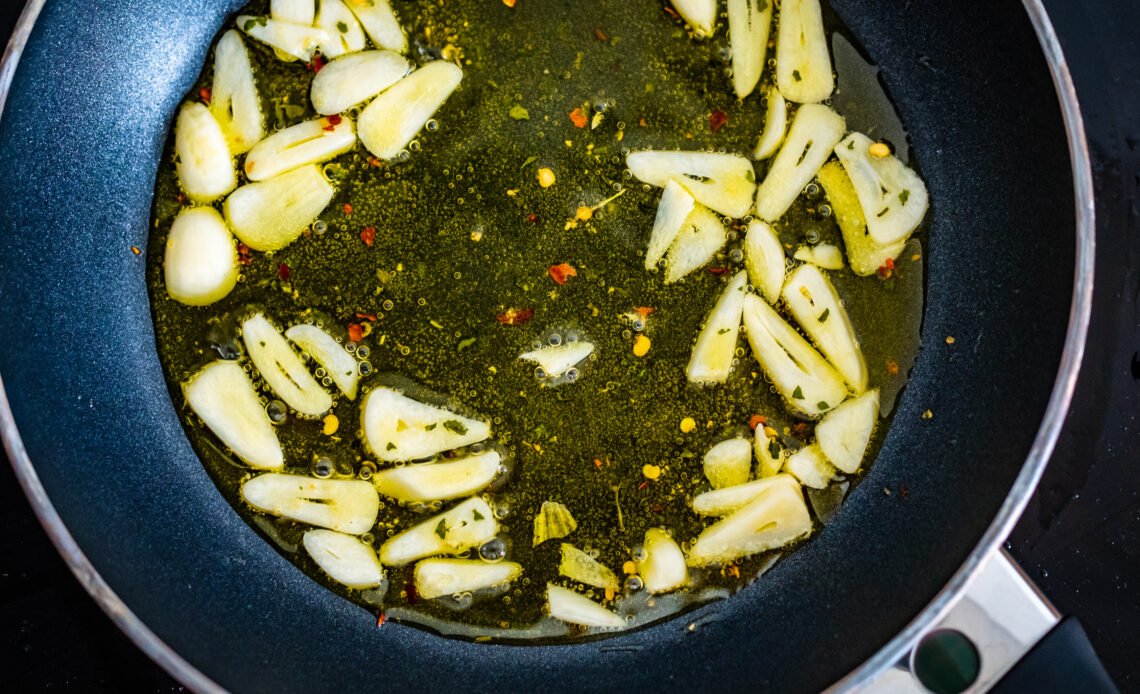
Soffritto (from the Italian soffriggere, “to fry gently”) is the aromatic base of countless Italian dishes. It’s a finely chopped mixture of onions, celery, and carrots, slowly cooked in olive oil or butter until soft and fragrant. This simple trio (sometimes called battuto when raw) transforms into something magical as it cooks, forming the backbone of sauces, soups, and braises.
Soffritto at a glance
| Ingredient | Role | Science Behind It |
|---|---|---|
| Onion | Sweetness, depth | Rich in sulfur compounds; caramelization creates complex flavors |
| Celery | Earthy, herbal | Contains volatile oils; slow cooking releases aromatic compounds |
| Carrot | Natural sweetness | High in sugars; softens quickly, adding body and color |
| Olive Oil | Medium, richness | Fat-soluble compounds carry flavors; healthy fats enhance mouthfeel |
Why is soffritto so popular?
Soffritto is the first layer of flavor in dishes like ragù, risotto, and minestrone. Its slow cooking process coaxes out natural sugars and aromatic compounds, creating a rich, savory base. From the north to the south of Italy, soffritto adapts. In Emilia-Romagna, it might include pancetta; in Sicily, garlic and chili. It’s a canvas for regional creativity. With just a few inexpensive ingredients, soffritto elevates humble dishes into something extraordinary.
The science behind soffritto
The Maillard reaction
When onions, celery, and carrots are cooked slowly, their natural sugars and amino acids undergo the Maillard reaction—a chemical process that creates new, complex flavors and aromas. This is why soffritto smells so intoxicating and tastes so rich.
Fat as a flavor carrier
Olive oil or butter acts as a medium, dissolving and distributing fat-soluble flavor compounds throughout the dish. The type of fat used can subtly change the final taste.
Cell wall breakdown
As vegetables cook, their cell walls soften and release trapped liquids and aromatics. This process is enhanced by salt, which helps draw out moisture and intensify flavors.
Recipes that start with soffritto
- Ragù alla Bolognese: The classic meat sauce for pasta.
- Risotto alla Milanese: Creamy, saffron-infused rice.
- Minestrone: Hearty vegetable soup.
- Osso Buco: Braised veal shanks.
By understanding the science behind soffritto and mastering the technique, you’ll unlock the secret to deeper, richer flavors in your cooking. Next time you’re in the kitchen, start with soffritto. It’s the little step that makes a big difference.