
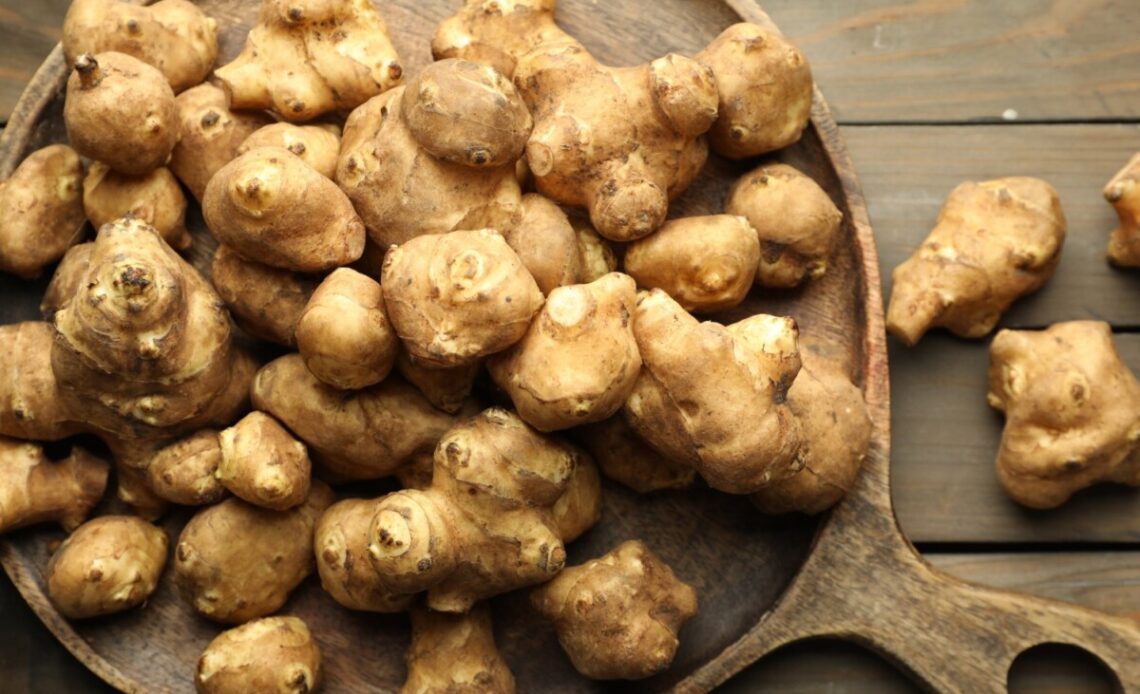
When we lived in Montreal, we would do most of our food shopping at Marché 440, an iconic public market where you can find fresh produce from local farmers at very convenient prices. It was there that I first noticed some little roots that I had never seen before, and discovered topinambour.
What is topinambour?
Topinambour (Helianthus tuberosus), also known as the Jerusalem artichoke or sunchoke, is a tuber native to North America. Despite its name, it has no connection to Jerusalem or artichokes. Its moniker likely stems from a mispronunciation of the Italian word girasole (sunflower), as the plant is part of the sunflower family.
Indigenous peoples of North America, including the Cherokee and Iroquois, cultivated topinambour for centuries, valuing it as a staple food. Early European settlers adopted it, and by the 17th century, it had made its way to Europe, where it gained popularity as a versatile and hardy crop. In France, it became a favorite of King Louis XIV, who prized its delicate, nutty flavor.
Culinary uses
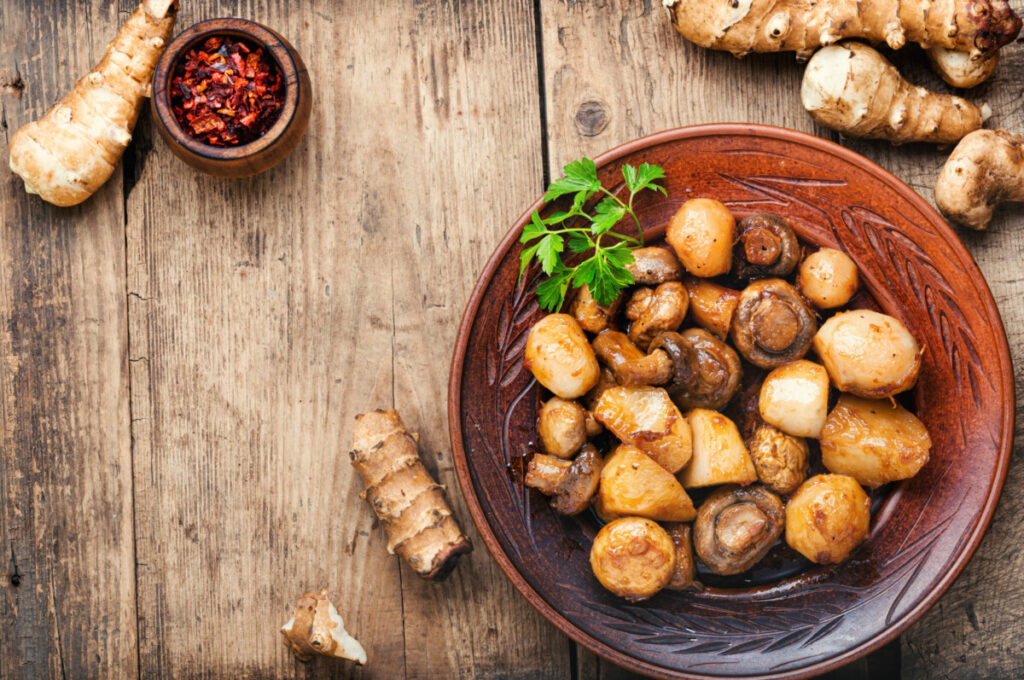
Topinambour is celebrated for its unique taste—often described as a cross between an artichoke heart and a potato, with a subtle sweetness and a hint of nuttiness. Its texture is crisp when raw and creamy when cooked, making it a favorite among chefs and home cooks alike.
How to use topinambour in the kitchen
- Raw: Thinly sliced or grated, topinambour adds a refreshing crunch to salads.
- Roasted or braised: Its natural sugars caramelize when roasted, enhancing its depth of flavor.
- Purées and soups: Blended into velvety soups or purées, it lends a rich, earthy note.
- Pickled or fermented: Preserving topinambour extends its shelf life and adds a tangy twist.
- As a substitute: It can replace potatoes or other root vegetables in many dishes, offering a lower-carb alternative.
Nutritional benefits
Topinambour is a powerhouse of nutrients. It is high in inulin, a prebiotic fiber that supports gut health, and rich in potassium, iron, and vitamins B and C. Its low glycemic index also makes it a great option for those managing blood sugar levels.
A versatile ingredient
Despite its somewhat knobby appearance, topinambour is a forgiving ingredient. It stores well in cool, dark places and can be used in a variety of dishes, from rustic to gourmet. Its ability to absorb flavors makes it a canvas for herbs, spices, and other seasonal ingredients.
Preparation
Topinambour’s skin is thin and edible, but peeling is recommended if the tubers are particularly gnarled. To prevent discoloration, soak peeled topinambour in water with a splash of lemon juice or vinegar.
Topinambour is a piece of culinary history, a nutritional gem, and a versatile ingredient waiting to be rediscovered. Since I learned about it, whenever I find it in a store or a market I buy it, usually to make a hearty stew or a soup. In the best Quebec tradition, soupe aux topinambours is a winter classic. It also used to make topinanmbours croustillants, roasted or fried until crispy, similar to how you might enjoy roasted potatoes or chips, just healthier.