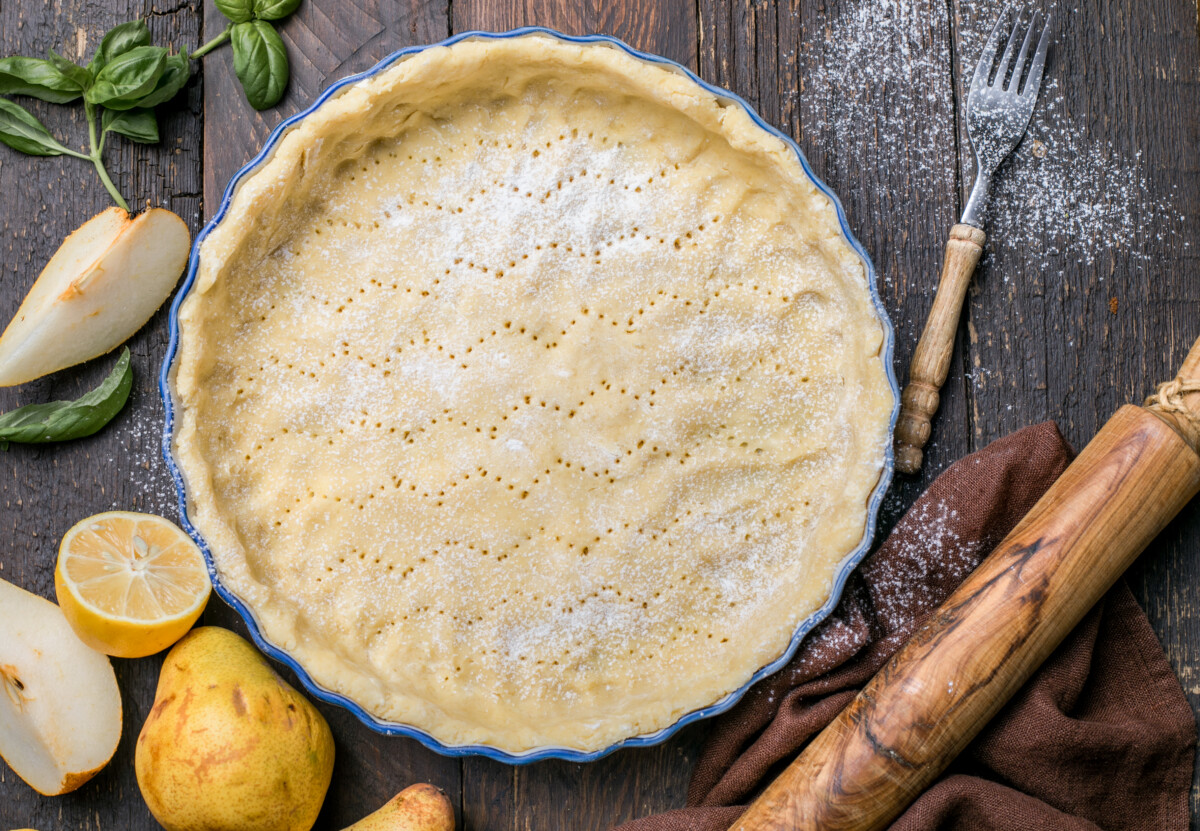
Few things elevate a pie, tart, or quiche like a flaky, buttery homemade pie crust. Known as pâte brisée in French cuisine, this versatile pastry is the foundation of countless sweet and savory dishes. While it may seem intimidating, mastering the perfect pie crust is simpler than you think—especially with a few pro tips and a foolproof recipe. For those avoiding dairy, a vegan variation is just as delicious and easy to make.
Why make your own pie crust?
Store-bought pie crusts are convenient, but nothing compares to the taste and texture of a homemade version. A well-made pâte brisée is crisp, tender, and rich, with layers that flake apart at the touch of a fork. Plus, making it from scratch allows you to control the ingredients, ensuring a fresher, more flavorful result.
The science behind the perfect crust
The secret to a great pie crust lies in the balance of fat, flour, and liquid, as well as the technique used to combine them. Here’s what each ingredient does:
- Flour: Provides structure. All-purpose flour is the standard, but for extra flakiness, some bakers use a mix of all-purpose and cake flour.
- Fat: Creates flakiness. Butter is traditional, but lard or shortening can also be used. The fat coats the flour, preventing gluten from forming too much, which keeps the crust tender.
- Liquid: Binds the dough. Ice water is essential: it keeps the fat from melting before the dough hits the oven.
- Salt: Enhances flavor and strengthens the dough slightly.
The key is to keep the fat cold and work the dough as little as possible. Overworking develops gluten, which can make the crust tough.
Pro tips for success
The secret to a great pie crust lies in the balance of fat, flour, and liquid, as well as the technique used to combine them. Here’s what each ingredient does:
- Flour: Provides structure. All-purpose flour is the standard, but for extra flakiness, some bakers use a mix of all-purpose and cake flour.
- Fat: Creates flakiness. Butter is traditional, but lard or shortening can also be used. The fat coats the flour, preventing gluten from forming too much, which keeps the crust tender.
- Liquid: Binds the dough. Ice water is essential—it keeps the fat from melting before the dough hits the oven.
- Salt: Enhances flavor and strengthens the dough slightly.
The key is to keep the fat cold and work the dough as little as possible. Overworking develops gluten, which can make the crust tough.
Classic Pâte Brisée Recipe
Ingredients
- 250g (2 cups) all-purpose flour
- 125g (½ cup + 1 tbsp) unsalted butter, chilled and cubed
- 1 tsp salt
- 1 tbsp granulated sugar (optional, for sweet pies)
- 60ml (¼ cup) ice water
Instructions
- Chill Everything:Place the flour in the freezer for 15 minutes before starting. Chill your mixing bowl and pastry cutter (or food processor) as well.
- Cut in the Butter:In the chilled bowl, combine the flour, salt, and sugar (if using). Add the cold, cubed butter. Using a pastry cutter, fork, or your fingertips, work the butter into the flour until the mixture resembles coarse crumbs with some pea-sized butter pieces visible. This step is crucial—those butter pieces will create the flaky layers.
- Add the Water:Sprinkle the ice water over the mixture, 1 tbsp at a time, gently tossing with a fork until the dough just begins to come together. It should be crumbly but hold when pressed.
- Form the Dough:Turn the dough out onto a lightly floured surface. Gently knead it just until it forms a smooth ball. Do not overwork it.
- Rest the Dough:Flatten the dough into a disc, wrap it in plastic wrap, and refrigerate for at least 1 hour (or up to 2 days). Resting allows the gluten to relax and the fat to re-solidify, making the dough easier to roll out.
- Roll and Blind Bake (if needed):On a floured surface, roll the dough to the desired thickness (about 3mm for most pies). Transfer to your pie dish, trim the edges, and crimp as desired. For pre-baking (blind baking), prick the bottom with a fork, line with parchment paper, fill with pie weights or dried beans, and bake at 190°C (375°F) for 15 minutes. Remove the weights and bake for another 5-10 minutes until golden.
Vegan Pâte Brisée Variation
Ingredients
- 250g (2 cups) all-purpose flour
- 125g (½ cup + 1 tbsp) vegan butter or coconut oil, chilled and cubed
- 1 tsp salt
- 1 tbsp granulated sugar (optional)
- 60ml (¼ cup) ice water
Instructions
- Follow the same steps as the classic recipe, substituting the vegan butter or coconut oil for the dairy butter.
- Tip: Coconut oil can be a bit softer at room temperature, so chill it well before using and work quickly to keep it solid.
Pro Tips for Success
- Keep it cold: The colder your ingredients and tools, the flakier your crust. If the dough starts to warm up while you’re working, pop it back in the fridge for a few minutes.
- Don’t overmix: As soon as the dough comes together, stop mixing. Overworking = tough crust.
- Vent the steam: For double-crust pies, cut a few slits in the top crust to allow steam to escape, preventing a soggy bottom.
- Egg wash: For a golden finish, brush the crust with a beaten egg (or plant-based milk for vegan) before baking.
Common mistakes to avoid
- Using warm butter: If the butter melts before baking, the layers won’t form, and your crust will be dense.
- Skipping the rest: Resting is non-negotiable. It prevents shrinking and ensures a tender texture.
- Over-flouring: Too much flour can make the dough dry and tough. Use just enough to prevent sticking.
Versatile uses for Pâte Brisée
- Sweet: Apple pie, fruit tarts, custard pies
- Savory: Quiche, pot pie, galettes, savory tarts
Mastering the perfect pie crust is a game-changer for any home baker. With a little practice and attention to detail, you’ll be turning out flaky, golden crusts that impress every time. And with the vegan variation, everyone can enjoy the buttery, crisp delight of a homemade pâte brisée.
Now, roll up your sleeves and get baking! What’s the first pie you’ll make with your newfound crust skills?