
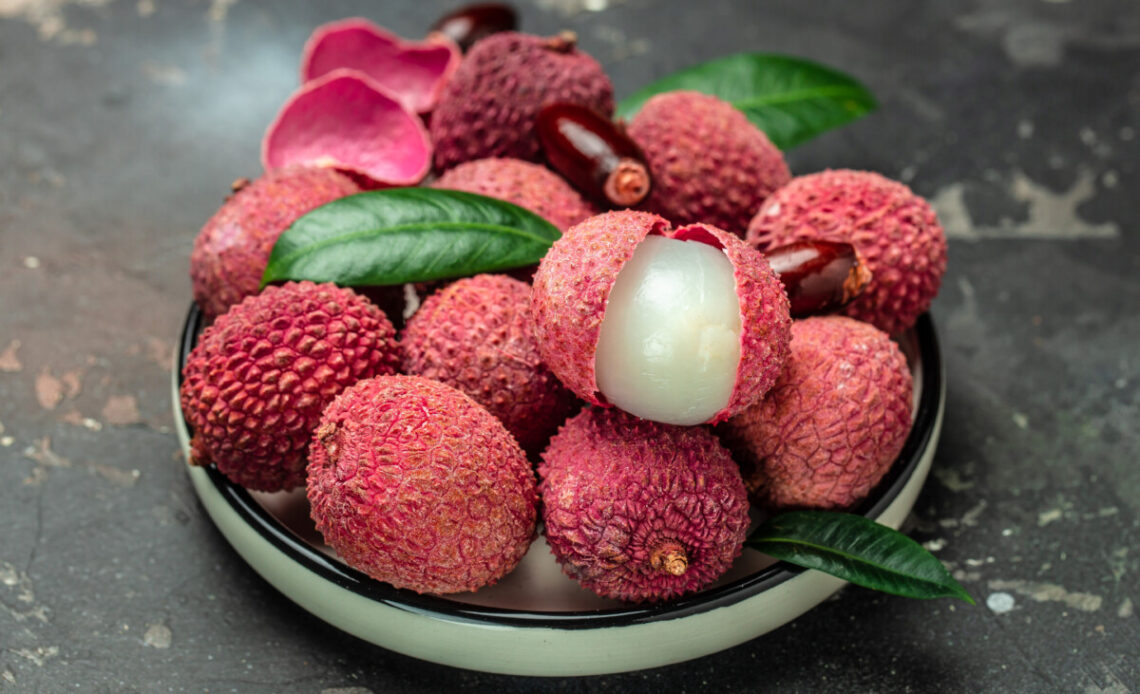
From its ancient roots in Southern China to its current status as a darling of modern mixology and pastry, the lychee (Litchi chinensis) is a fruit defined by its contrast: a rough, bumpy crimson husk that gives way to a translucent, floral, and incredibly juicy flesh.
Here is a look at how this remarkable fruit has been celebrated through the ages and how it continues to reinvent itself in contemporary cuisine.
Traditional uses of lychee
For over a thousand years, the lychee was a luxury item reserved for royalty. During the Tang Dynasty, Emperor Xuanzong famously set up a horse-relay service to carry fresh lychees from southern China to the northern capital just to please his favorite concubine, Yang Guifei.
Traditionally, lychee has been used in Asian culinary practices in several distinct ways:
- Fresh and seasonal: In regions where it grows, the ultimate way to enjoy lychee has always been straight from the tree during its brief summer harvest.
- Dried (lychee nuts): When dried, the skin turns brown and brittle, and the flesh shrinks into a dark, sweet, chewy raisin-like state. These “lychee nuts” are traditionally enjoyed as a snack or used to sweeten herbal teas and soups.
- Savory Chinese dishes: Lychee’s natural sweetness has long been used to balance savory and rich meats. It is a classic component in authentic Cantonese sweet and sour dishes, frequently paired with pork, duck, or stir-fried shrimp.
- Traditional medicine and tonics: In Traditional Chinese Medicine (TCM), lychee is considered a “warming” food. It was often steeped into teas or combined with jujubes and goji berries to boost vitality and improve circulation.
Modern culinary uses
In modern global cuisine, the lychee has broken out of its traditional geographic boundaries. Chefs and mixologists worldwide are drawn to its unique flavor profile, which balances a grape-like texture with notes of rose, pear, and watermelon.
Lychee special place in mixology and beverage culture
If there is one place where modern cuisine completely embraced the lychee, it is behind the bar. The Lychee Martini became a staple of upscale nightlife in the late 1990s and 2000s, blending vodka, lychee liqueur (or juice), and a whole fruit garnish. Today, it is also a popular flavor in:
- Artisan bubble teas and fruit teas.
- Craft sodas and sparkling waters.
- Refreshing summer mocktails paired with mint, lime, and cucumber.
Lychee in contemporary pastry and desserts
Modern pastry chefs love pairing lychee with flavors that complement its floral undertones. One of the most famous modern dessert flavor combinations in the world is the Ispahan profile, popularized by French pastry chef Pierre Hermé, which beautifully marries:
Lychee + Rose + Raspberry
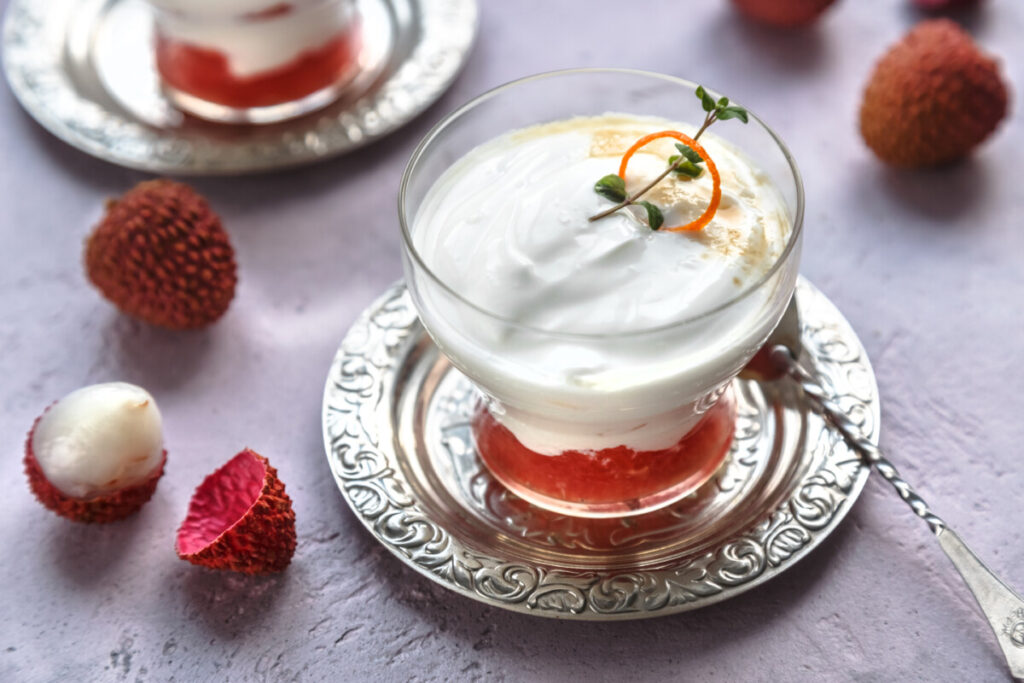
You will find lychee featured in high-end culinary creations such as:
- Sorbets and gelatos: Its high water content makes it perfect for smooth, refreshing frozen desserts.
- Panna cottas and mousses: Often layered with a tart fruit companion, like passion fruit or raspberry, to cut through the sweetness.
- Macarons: Where lychee buttercream or ganache provides an exotic twist.
Fusion savory dishes
Modern chefs continue to experiment with lychee in savory contexts, moving beyond the traditional stir-fry:
- Salads: Tossing fresh lychees into a summer salad with arugula, goat cheese, and a citrus vinaigrette.
- Curries: Adding whole lychees to spicy Thai duck curry or coconut-based seafood curries to provide a sudden, refreshing burst of sweetness that tames the chili heat.
- Ceviche: Pairing diced lychee with white fish, lime juice, cilantro, and red onions for a tropical twist on Latin American classics.
A flavor profile comparison
| Attribute | Traditional Cuisine | Modern Cuisine |
| Primary Forms | Fresh, dried (lychee nuts), canned in syrup | Fresh, puréed, liqueurs, dehydrated powder |
| Flavor Pairings | Pork, duck, shrimp, ginger, herbal teas | Rose, raspberry, passion fruit, gin, mint |
| Common Roles | Sweet-and-savory balance, imperial delicacies, TCM tonics | Craft cocktails, high-end pastry, global fusion dishes |
Whether dried in a warming winter tea or muddled into a refreshing summer cocktail, the lychee remains one of the world’s most versatile and captivating fruits. Its journey from imperial Chinese orchards to global culinary stardom proves that some flavors are simply timeless.