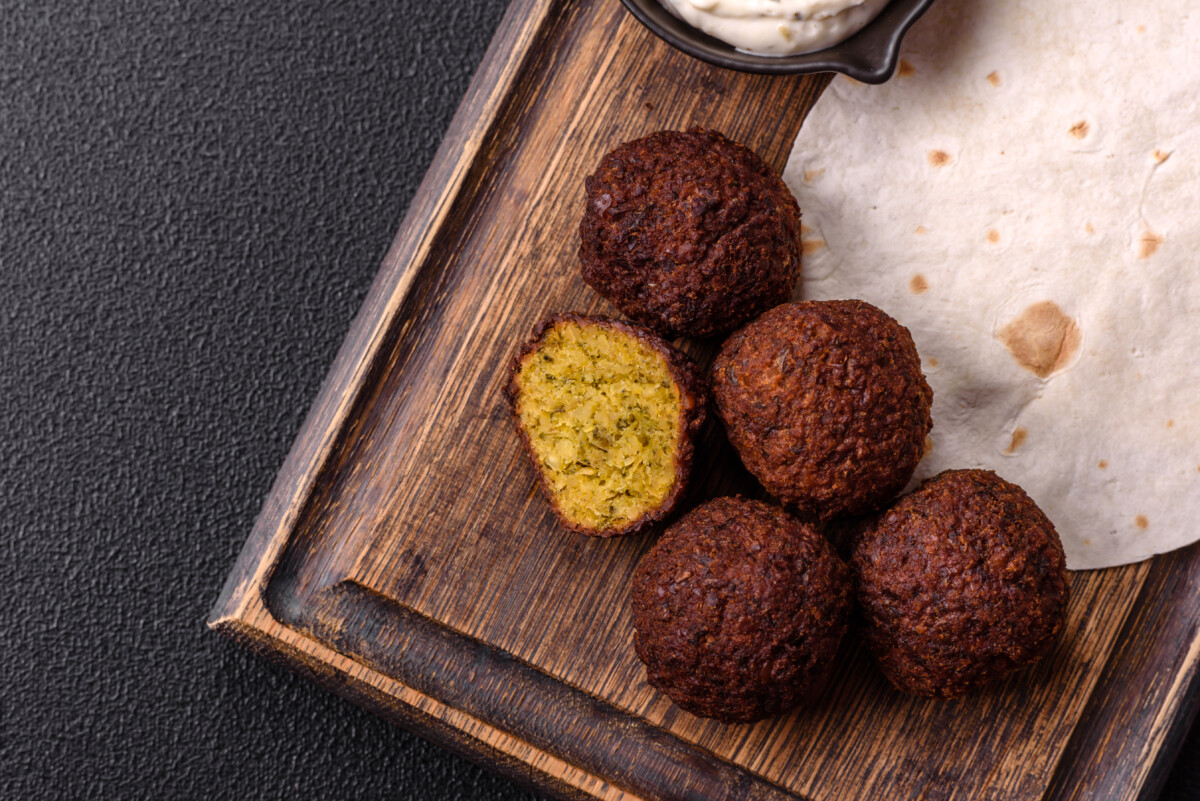
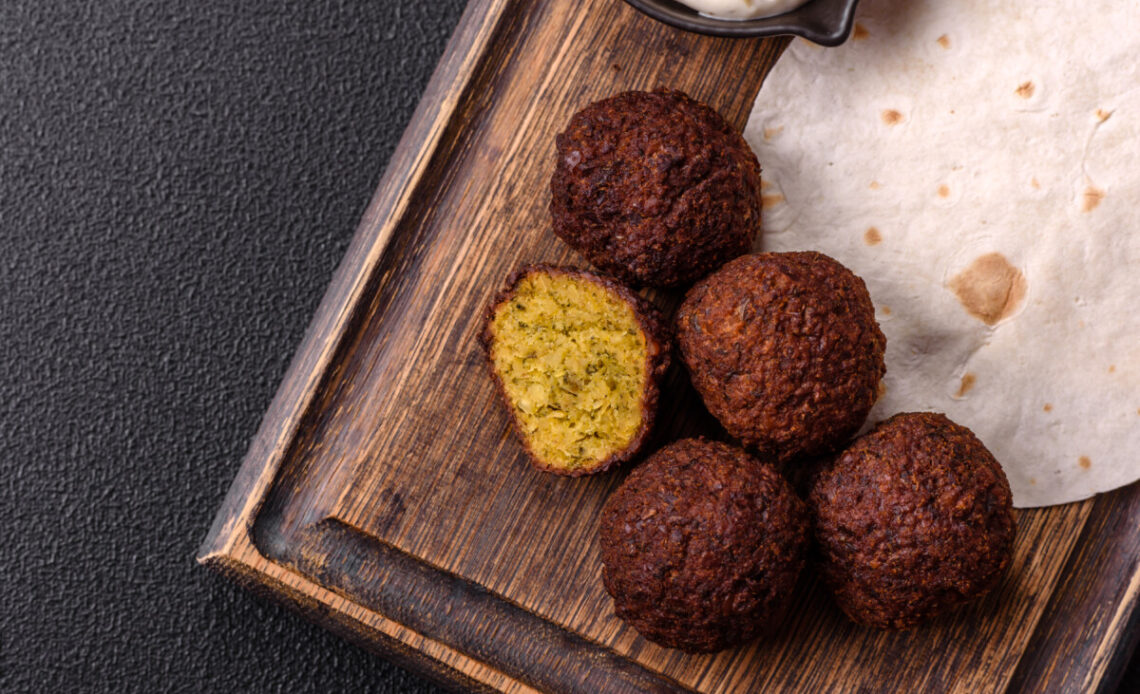
From the streets of Cairo to the busy markets of Beirut, falafel are found throughout the Middle East, North Africa, and the global diaspora. More than a fried chickpea patty, falafel is a communal snack that can be customized with different ingredients and cooking techniques.
A dish born from resourcefulness and regional ingredients, falafel embodies how culture adapts without losing its essence. The base is humble: dried chickpeas or fava beans soaked until plump, blended with herbs, garlic, onions, and spices, then formed into balls or patties and fried until crisp.
Regional differences
- Levantine falafel (Jerusalem, Lebanon, Syria) often uses a balance of parsley, cilantro, and dill, with a touch of cumin and coriander that gives a bright, herb-forward bite.
- Egyptian falafel leans on fava beans and a garlic-clove punch, sometimes with coriander seeds and onions that yield a richer, earthier note.
- North African variations may incorporate spices like harissa, cumin, cumin seeds, or preserved lemon to coax a sharper tang and warmth.
Bread and toppings
A proper falafel sandwich shines with a pita, crisp falafel, crunchy vegetables, and toppings that carry the flavors: use tahini, hummus, amba or pickles, fresh herbs, and a citrusy zing from lemon juice or sumac.
Quick tips for better falafels
- Texture: a grainy interior and crisp exterior are the goal. Avoid over-blending.
- Temperature control: too cool oil = greasy; too hot = burnt outside before the inside cooks.
- Fresh herbs brighten the dish; don’t skimp on parsley and cilantro.
- If the batter is too loose, rest it 15–20 minutes or add a bit more flour. If too stiff, add a splash of water.