
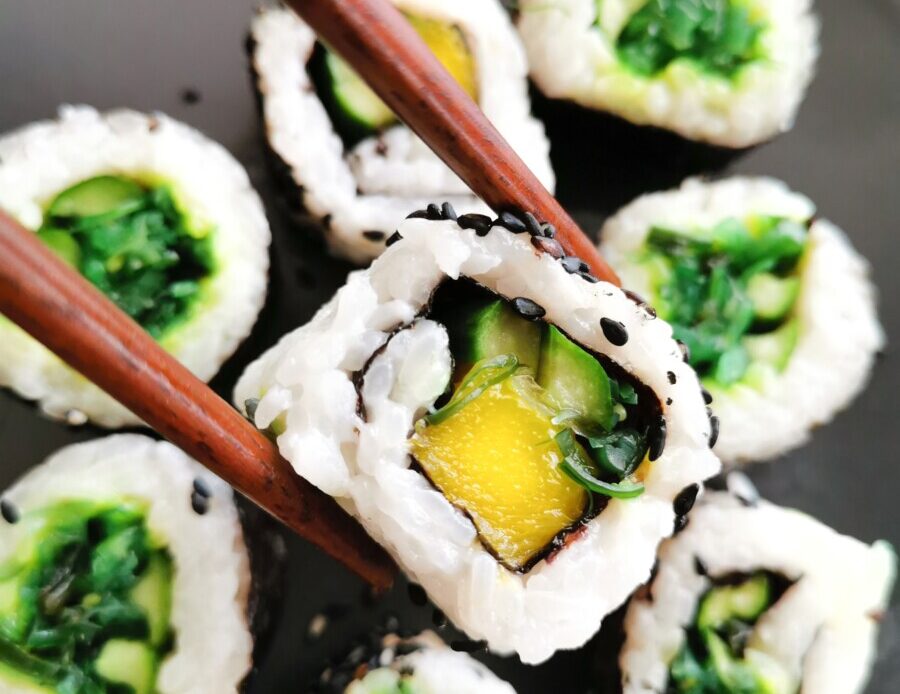
The only possible argument against sushi is the doubts about the freshness of the fish used to prepare it. Plant-based sushi takes that negative away. Not only it’s healthy (packed with veggies, fiber, and plant-based proteins), it’s also sustainable, versatile, and fun to prepare at home. Plant-based sushi is perfect for meal prep, parties or a creative meal.
Here’s all you need to know to get started!
Essential ingredients
For the sushi rice base:
- 2 cups sushi rice
- 2 cups water
- 1/4 cup rice vinegar
- 2 tablespoons sugar
- 1 teaspoon salt
Fillings and toppings ideas:
- Proteins: marinated tofu (teriyaki, sriracha, or soy-ginger), tempeh (steamed or pan-fried), edamame (shelled and lightly salted), or seitan (thinly sliced)
- Veggies: sliced avocado, julienned or sliced cucumber, julienned or pickled carrots, thinly sliced bell peppers, blanched asparagus, thinly sliced or spiralized zucchini, sauteed or marinated mushrooms, spinach or kale (blanched).
- Fruits: thinly sliced mango, sliced strawberry, thinly sliced persimmon.
- Extras: Nori seaweed sheets, sesame seeds, pickled ginger, wasabi, soy sauce or tamari, vegan mayo or spicy mayo (mayo with sriracha), furikake (seaweed seasoning).
Tools
Depending on the type of sushi you want to prepare, you might need a bamboo sushi mat (makisu), a sharp knife (dampened for clean cuts), a plastic wrap (for inside-out rolls), an ice-cube tray (for bite-sized sushi), and a small ball of water.
Tips to prepare a perfect sushi rice base
The sushi rice base is the first thing you’ll prepare. First, rinse the rice 3–4 times until the water runs clear. This removes excess starch. Cook the rice in a rice cooker or pot (1:1 rice-to-water ratio). Let it sit covered for 10 minutes after cooking. And finally, season the rice: heat rice vinegar, sugar, and salt in a small saucepan until dissolved, then gently fold the mixture into the warm rice with a wooden spoon. Avoid mashing the grains. Finally, cool slightly before using. Keep it covered with a damp towel to prevent drying.
Sushi shapes and techniques
Nigiri (hand-pressed sushi)
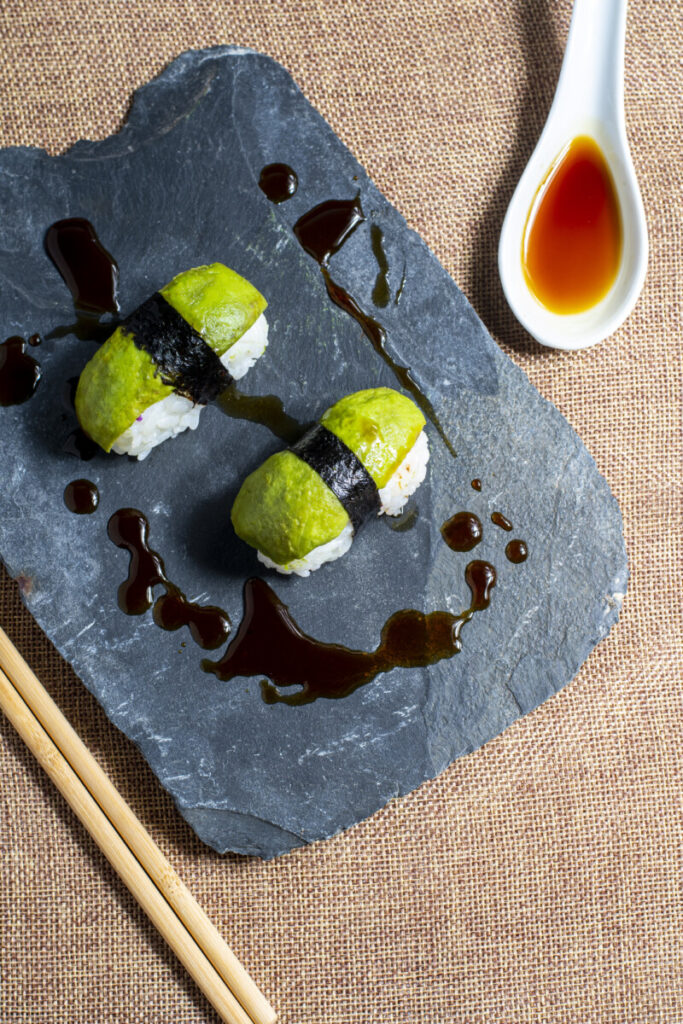
Nigiri has an oval shape and features a topping, typically without nori wrapping. To make it, wet your hands and grab a small handful of rice (~20g). Shape into a small oval or rectangle, and add a slice of topping (e.g., marinated tofu, avocado, or mango) on top. Press gently to adhere. Serve with a dab of wasabi or soy sauce. Typical plant-based toppings are: teriyaki tofu + sesame seeds, avocado + furikake, or pickled radish + vegan mayo.
Maki (classic rolls)
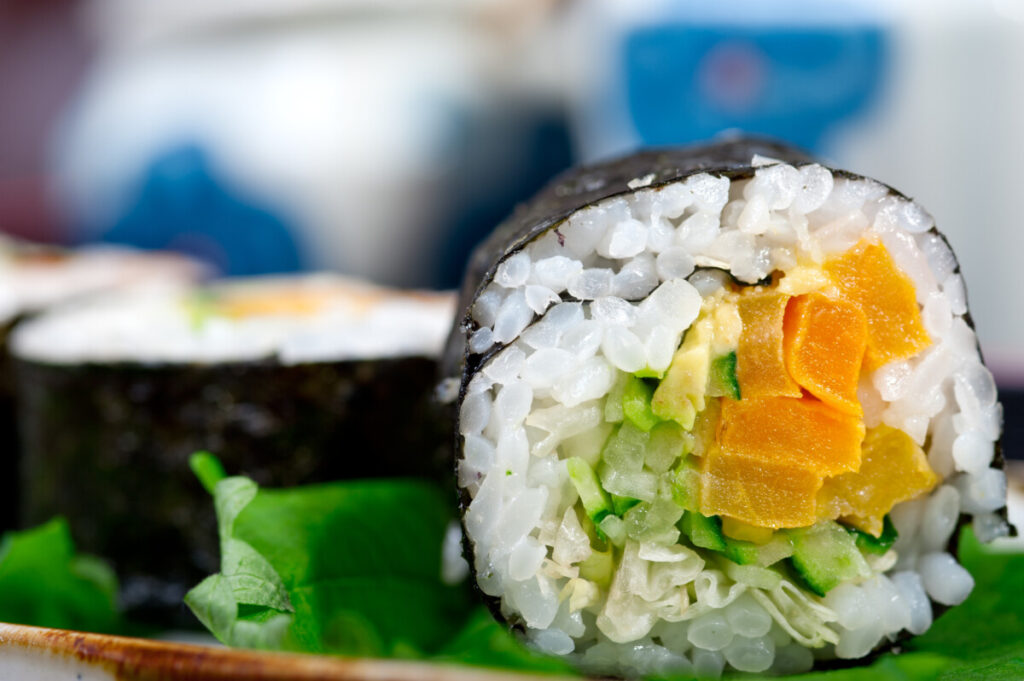
Maki are cilindrical rolls wrapped in nori and cut into pieces. To make them, place a nori sheet with the shiny side down on a bamboo mat. Wet your hands and spread a thin layer of rice over the nori, leaving a 2,5 cm (1-in) border at the top. Add the fillings in a line across the rice, about 2.5 cm (1-in) from the bottom edge. Lift the edge of the mat closest to you and roll tightly away from you, using the mat to shape the roll. Wet the top border of the nori to seal the roll and then use a sharp, damp knife to cut into 6-8 pieces.
Popular maki variations are:
- Hosomaki (Thin Rolls): ½ sheet of nori, 1–2 fillings (e.g., cucumber + carrot).
- Futomaki (Thick Rolls): Full sheet of nori, 3–4 fillings (e.g., tofu, avocado, bell pepper, spinach)
Uramaki (inside-out-rolls)
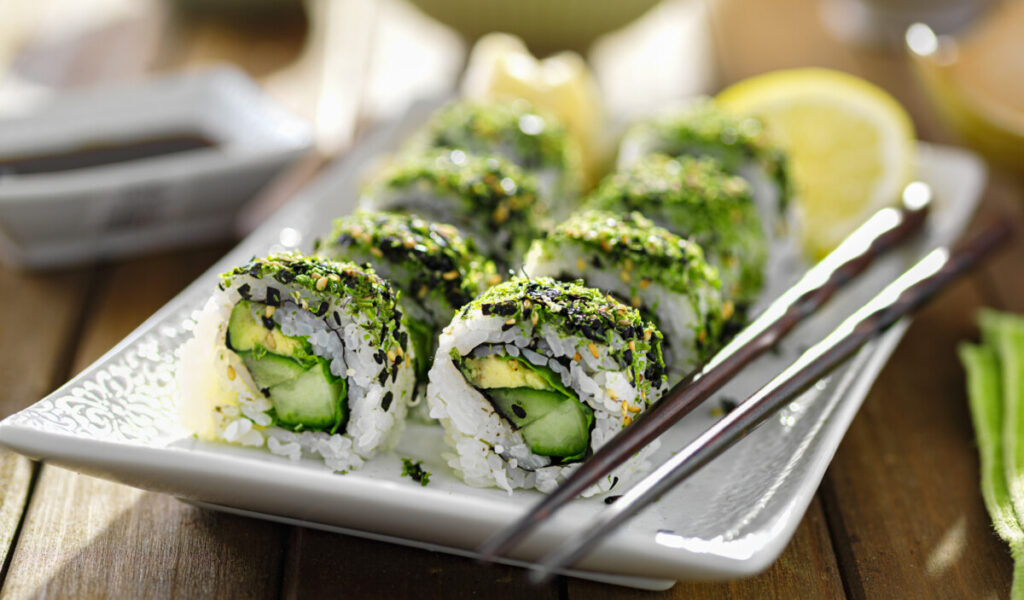
Uramaki have rice on the outside, and nori and filling on the inside. To make them, place a nori sheet on a bamboo mat and cover with plastic wrap (to prevent sticking). Spread the rice over the nori, leaving no border. Flip the nori and the rice over so the rice is facing down. Add the fillings in a line across the nori. Roll tightly using the mat, then remove the plastic wrap. Finally, roll in sesame seeds or furikake (optional), and cut into pieces with a damp knife.
Popular uramaki combos are:
- California Roll: Avocado, cucumber, carrot, vegan crab (hearts of palm or jackfruit)
- Spicy Tofu Roll: Spicy marinated tofu, cucumber, vegan mayo
Temaki (hand rolls)
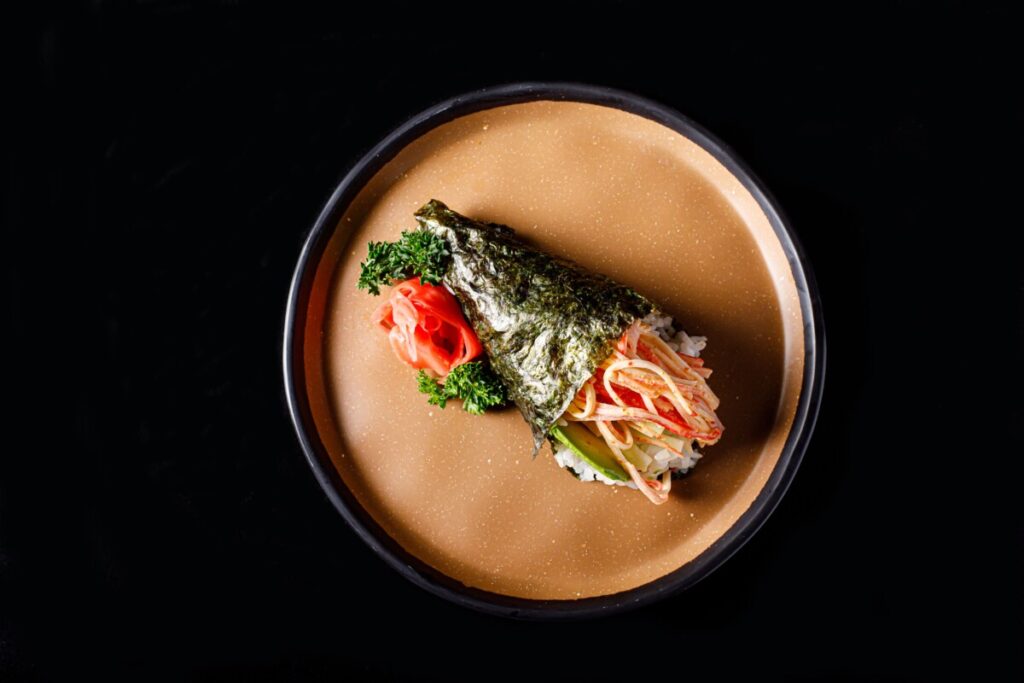
Temaki is a cone-shaped sushi that is eaten with your hands. To make it, cut a nori sheet in half. Spread the rice over one half, leaving a small border at the top. Add the fillings diagonally across the rice. Roll into a cone shape, starting from one corner and tucking in the fillings as you go. Eat immediately (they don’t hold shape well for long). Tip: temaki is great for parties: let your guests customize their own!
Oshi Sushi (pressed sushi)
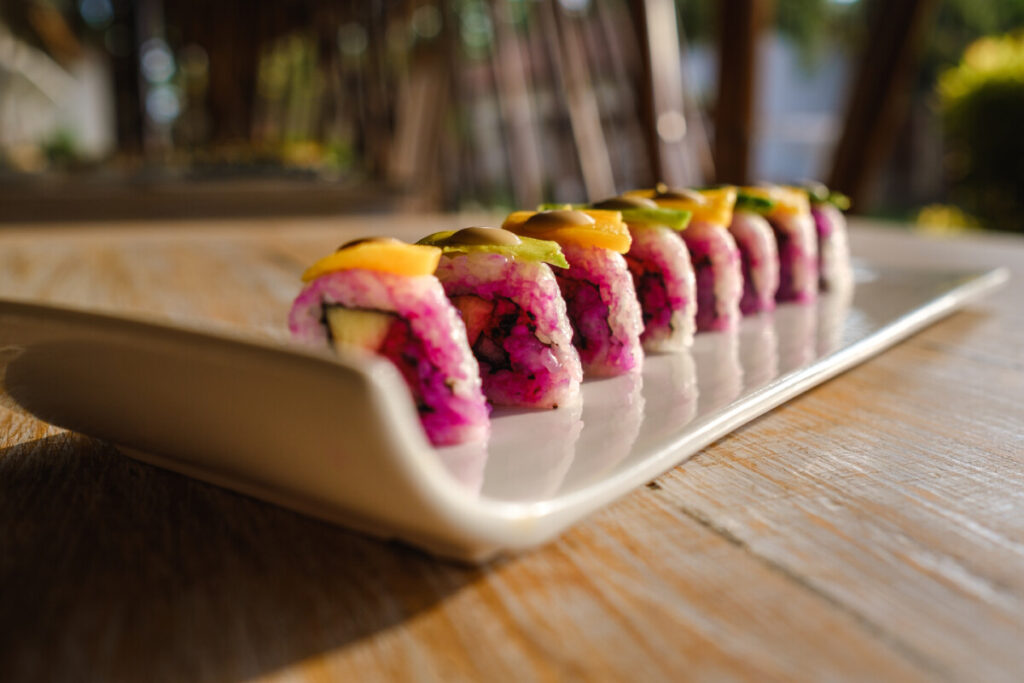
Oshi sushi is layered sushi pressed in a mold or a tray. To make it, line a small rectangular mold or loaf pan with plastic wrap. Add a layer of rice, pressing down firmly. Add a layer of fillings (e.g., marinated mushrooms, avocado). Repeat layers, ending with rice. Press down firmly, then chill for 1 hour. Unmold and slice into rectangles.
Inari sushi (stuffed tofu pockets)
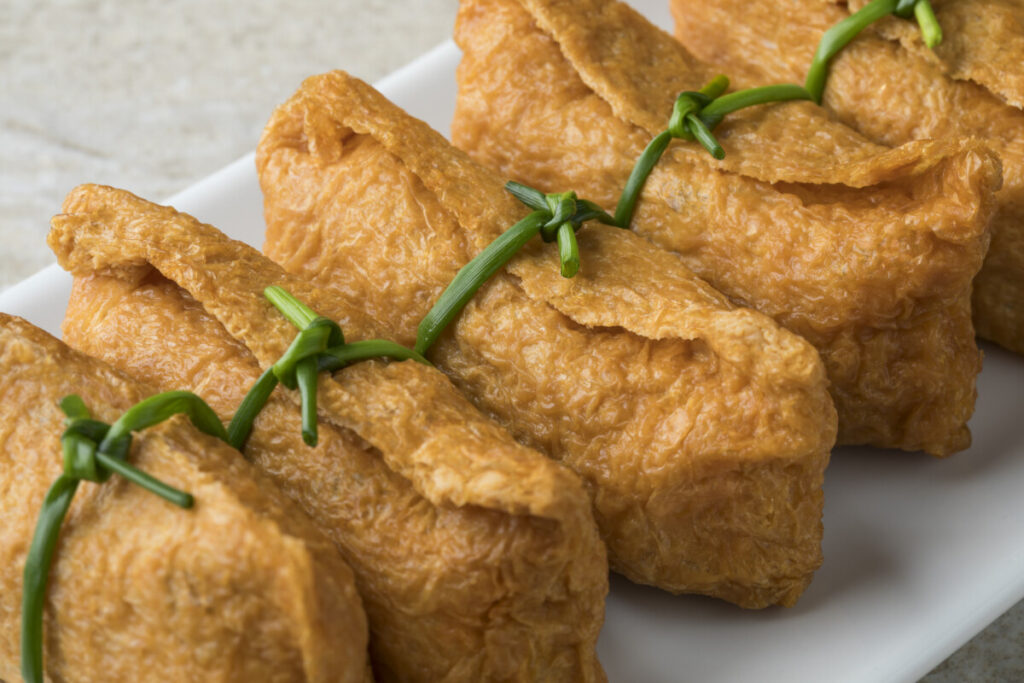
Inari sushi is sweet tofu pockets filled with rice and toppings. To make it, simmer the tofu pockets (inari age) in a mix of soy sauce, sugar, and dashi (use vegan dashi or skip for a simpler version). Drain and cool. Fill each pocket with sushi rice and toppings like pickled veggies or edamame.
Ice cube tray sushi
Here’s a great trick for parties (or to make your kids happy whenever they ask for sushi). All you need to whip up bite-sized sushi is a silicone ice-cube tray (square or rectangular molds), sushi rice, and fillings of your choice. You can also use nori sheets (optional). If you don’t have a silicon ice cube tray, you can use plastic ones, lined with a sheet of plastic film: the film will allow you to pop out the sushi just as with silicone.
Method 1: sushi bites
Press the rice into the tray: wet your fingers and press the sushi rice into each compartment, filling about ¾ full. Top with small pieces of avocado, cucumber, tofu, or mango. Optionally, add a tiny strip of nori on top for decoration. Refrigerate for 30 minutes to set, and unmold: pop out the bites and serve with soy sauce or spicy mayo for dipping.
Method 2: mini rolls
Line the tray: cut the nori sheet into small strips and press into the bottom of each compartment. Press a thin layer of rice on top of the nori. Add a small amount of filling (e.g., a piece of tofu + avocado). Add another thin layer of rice to cover the filling. Press and chill: use the back of a spoon to press down, then chill for 30 minutes. Pop out and serve!
Flavor boosters and sauces
Marinades for proteins
Teriyaki: 3 tbsp soy sauce, 2 tbsp maple syrup, 1 tbsp rice vinegar, 1 tsp grated ginger, 1 clove garlic (minced). Simmer tofu or tempeh in the sauce until coated.
• Spicy Sriracha: 2 tbsp sriracha, 1 tbsp soy sauce, 1 tbsp maple syrup, 1 tsp lime juice. Toss tofu or seitan in the mix.
• Miso-Glaze: 2 tbsp white miso, 1 tbsp maple syrup, 1 tbsp rice vinegar, 1 tsp sesame oil. Brush on tofu before baking.
Dipping sauces
Classic Soy Sauce: Tamari for gluten-free.
• Spicy Mayo: ¼ cup vegan mayo + 1 tbsp sriracha + 1 tsp lime juice.
• Peanut Sauce: 2 tbsp peanut butter, 1 tbsp soy sauce, 1 tbsp lime juice, 1 tsp maple syrup, 1 tsp grated ginger, water to thin.
• Eel Sauce (Vegan): 3 tbsp soy sauce, 2 tbsp maple syrup, 1 tbsp rice vinegar. Simmer until thickened.
Six rules to sushi like a pro
- Sushi rice should be sticky but not mushy. Use short-grain rice for best results.
- Dip your knife in water before each cut to prevent sticking. Use a gentle sawing motion.
- Toast nori sheets lightly over a flame for extra crispness (optional).
- Chop all fillings before starting. Keep rice covered to prevent drying.
- Sushi is best eaten fresh but can be stored in the fridge for up to 24 hours. Wrap tightly in plastic wrap.
- Label ingredients if serving to a group (e.g., nuts, gluten).
Serving ideas
- Platter: Arrange sushi on a wooden board with pickled ginger, wasabi, and soy sauce.
- Bento Box: Pack sushi with edamame, seaweed salad, and miso soup.
- Party Spread: Set up a DIY sushi bar with bowls of rice, fillings, and nori sheets.
Meal prep and storage
- Fridge: Store in an airtight container for up to 2 days.
- Freezer: Not recommended (rice texture changes).
- Reheating: Avoid microwaving. Serve cold or at room temperature.
Ready for sushi night? Tell us in the comments which is your favorite sushi type and flavor combination!