
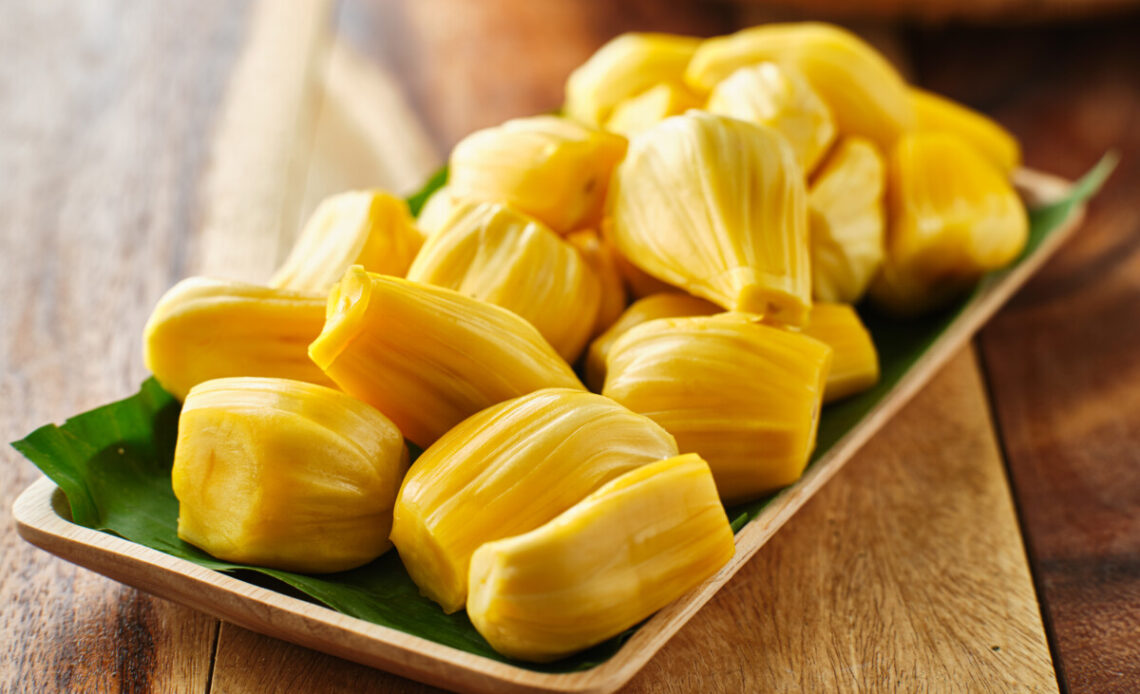
Jackfruit is tropical fruit, native to South and Southeast Asia, that has become a favourite in vegan and vegetarian kitchens because of one unusual characteristic: when young and unripe, its texture closely resembles shredded meat.
From smoky pulled “pork” sandwiches to tacos, curries, and hearty stews, jackfruit offers a satisfying base for comfort foods without relying on animal products. It absorbs flavors exceptionally well, making it one of the most versatile ingredients for anyone experimenting with meat-free cooking.
What exactly is jackfruit?
Jackfruit is the largest tree-borne fruit in the world, sometimes reaching over 30 kilograms. When ripe, it has a sweet flavor often compared to mango, banana, and pineapple combined. Ripe jackfruit is commonly used in desserts and smoothies.
The version used in savory plant-based cooking, however, is young green jackfruit. At this stage, the fruit is relatively neutral in flavor and develops long fibrous strands when cooked, giving it a texture remarkably similar to pulled meat.
Most people outside tropical regions buy it canned, usually packed in water or brine. Avoid versions packed in syrup, as those are intended for sweet recipes.
Why jackfruit works so well as a meat substitute
The appeal of jackfruit is not that it tastes like pork or chicken on its own. Rather, it acts as a culinary blank canvas.
Its structure naturally pulls apart into tender strands, allowing sauces, spices, smoke, and marinades to become the dominant flavors. This makes it ideal for dishes traditionally built around slow-cooked meats.
Unlike many highly processed meat substitutes, jackfruit is also minimally processed and relatively low in calories. It pairs particularly well with bold seasoning blends such as:
- Smoked paprika
- Garlic and onion
- Chipotle and chilli powders
- Soy sauce or tamari
- BBQ sauce
- Curry pastes
- Cumin and coriander
The famous pulled “pork” jackfruit sandwich
The most iconic jackfruit recipe is undoubtedly BBQ pulled “pork.”
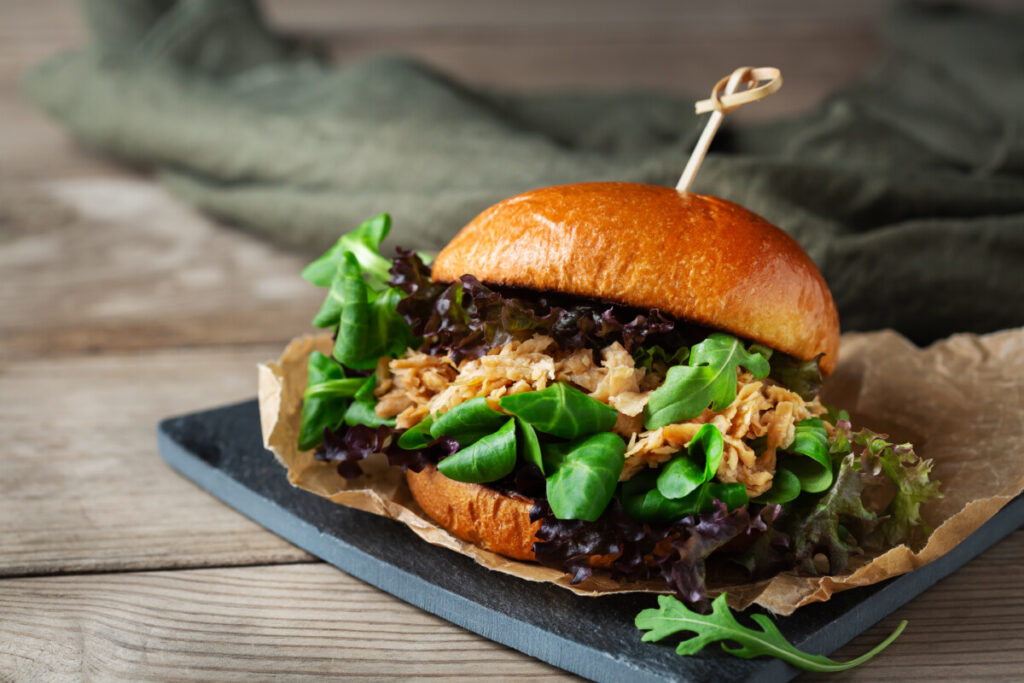
The preparation is surprisingly simple. Young jackfruit is drained, rinsed, and gently shredded by hand or with forks. It is then sautéed with onions, garlic, spices, and sauce before simmering until tender.
The result delivers much of the comfort and richness associated with traditional barbecue sandwiches, especially when paired with:
- Toasted buns
- Coleslaw
- Pickles
- Cornbread
- Roasted potatoes
The texture becomes especially convincing when the jackfruit is briefly roasted or pan-seared after simmering, creating crispy edges similar to caramelized barbecue meat.
Beyond BBQ: other comfort food possibilities
Jackfruit’s adaptability goes far beyond sandwiches.
Tacos and burritos
Seasoned with cumin, chilli, lime, and garlic, jackfruit becomes an excellent taco filling. Its shredded texture works beautifully in burritos, enchiladas, and loaded nachos.
Curries and stews
In South Asian cuisine, jackfruit has been used for centuries in savoury dishes. It absorbs coconut milk, tomato sauces, and spice blends particularly well.
Whether simmered in a rich curry or added to hearty stews, it provides body and texture without overwhelming the dish.
Sandwiches and wraps
Jackfruit can also replace chicken in wraps and sandwiches. Buffalo-style jackfruit with vegan ranch dressing has become especially popular in cafés and plant-based restaurants.
Breakfast dishes
Some cooks even use seasoned jackfruit in breakfast skillets or savory hashes alongside potatoes, peppers, and onions.
Tips for cooking with jackfruit
A few techniques can dramatically improve the final result:
Rinse It Well
Canned jackfruit packed in brine can taste slightly salty or acidic. Rinsing thoroughly helps neutralize the flavour.
Remove Tough Core Pieces
Some canned varieties contain firmer triangular core sections. These are edible, but chopping them smaller improves consistency.
Dry Before Browning
Patting jackfruit dry before sautéing helps achieve better caramelization and texture.
Don’t Under-Season
Jackfruit itself is mild. Strong seasoning is essential to build depth and richness.
Finish with Heat
Roasting or pan-frying after simmering creates crispy edges and prevents the texture from becoming too soft.
Is jackfruit healthy?
Jackfruit contains fibre, vitamin C, potassium, and antioxidants. However, unlike beans, tofu, or lentils, it is relatively low in protein.
For balanced plant-based meals, many cooks combine jackfruit with:
- Black beans
- Chickpeas
- Lentils
- Tofu
- Nuts or seeds
This creates dishes that are both satisfying and nutritionally complete.
A gateway ingredient for curious cooks
One reason jackfruit has become so popular is that it helps bridge familiarity and experimentation. For people transitioning toward plant-based eating, it offers comforting textures tied to familiar dishes while introducing new culinary possibilities. It is not meant to perfectly imitate meat. Instead, it creates a new category of hearty, flavorful cooking that stands on its own.
Whether layered into tacos, simmered in curry, or piled high onto a smoky barbecue sandwich, jackfruit proves that plant-based comfort food can be rich, satisfying, and surprisingly creative.